Tips for Building a Course at Home

Setting a course in your home ring is no easy task. To do it well, this skill requires planning and practice. Keep reading for tips from BarnManager on how to successfully set a course at your farm.

Know Your Ring

An important part of coming up with a course is understanding the size and shape of your ring. For example, you will build a different style of course for a long and narrow ring than you would for a square-shaped arena. It is important to acknowledge these differences so you can set a track that rides well and makes good use of the shape of your particular ring.

Consider Your Goals for Your Horse

When setting a course, think about what skills you are working on improving with your horse. Try to add those types of fences or tracks into your course so you can practice them regularly. This could be a trot jump, one stride, skinny fence off of a tight turn, or bending line on the right lead.

Find Inspiration
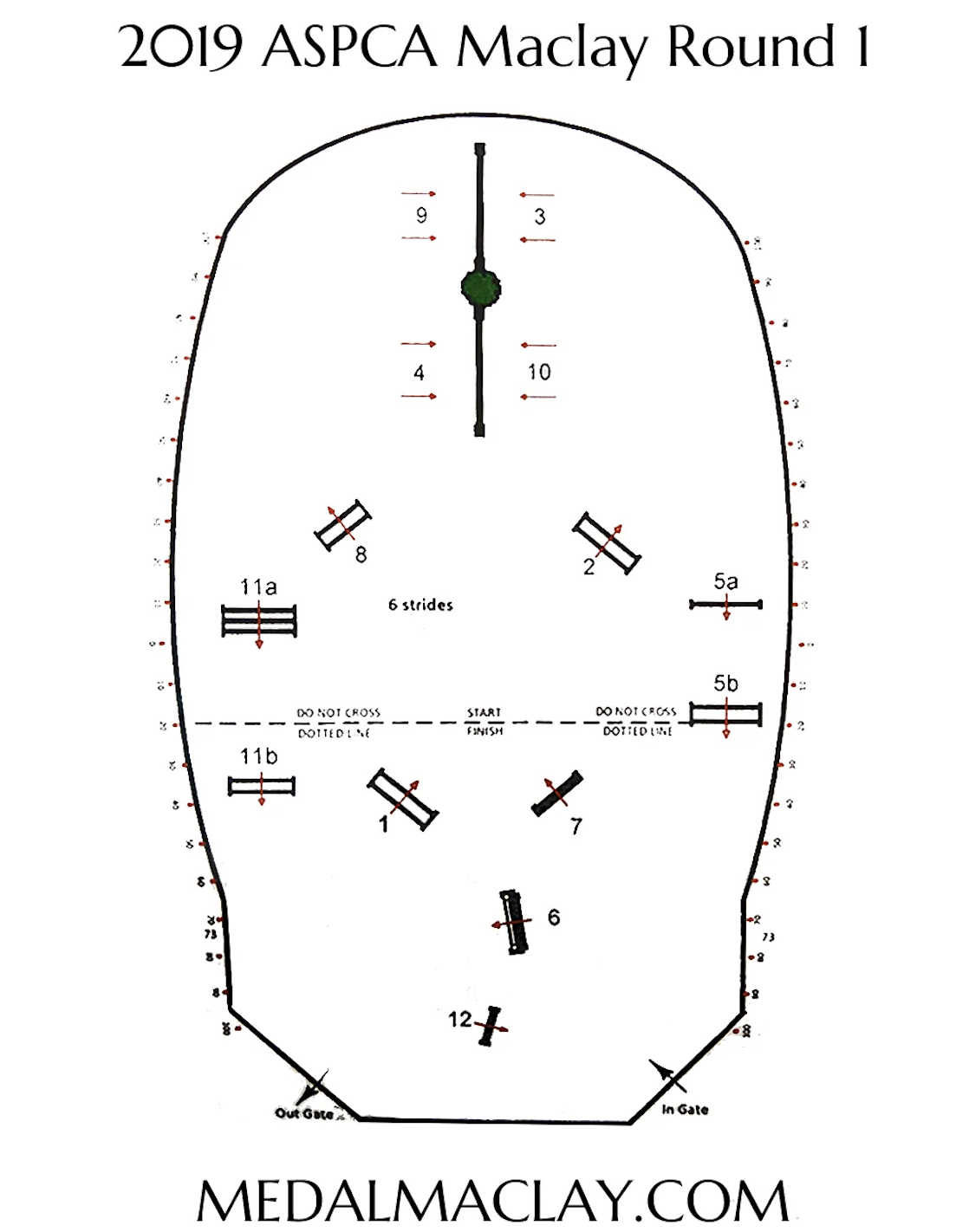
Course maps from previous hunter, jumper, and equitation classes or finals are often available online. Although your arena may not fit all of the jumps or allow the same number of strides in a line, pick certain interesting parts to recreate. Also, if you are at a horse show and see a course you like, take a picture of the course map to save for later.

Map Out Your Ideas

Before you start moving standards and flower boxes around, draw out your plan on a piece of paper. Even if you have a solid idea in your head, writing it down will help you visualize the entire course and ensure you have the correct number of standards and poles required. List the types of standards and fill, objects such as flower boxes, walls, or gates, you want for each jump so when it’s time to start doing the heavy lifting things will go more quickly.

Make Sure Your Jumps Match

When designing your course plan, think about the types of standards, poles, and fill you have. Try to make the standards and colored poles match in each line, similar to what you would find at a horse show. Although you may not have enough paired standards or colored rails to coordinate everywhere, it is nice to make the course as appealing as possible.

Build a Versatile Course

Most barns cater to a variety of disciplines and have a mix of riders and horses at different levels of experience. When building a course, try to include options that work for hunter, jumper, and equitation riders. Aim to create courses that can be adjusted to accommodate beginners as well as those that are more advanced. When you build a challenging course, include a few welcoming fences that are easy to make small for horse-and-rider combinations of all levels.
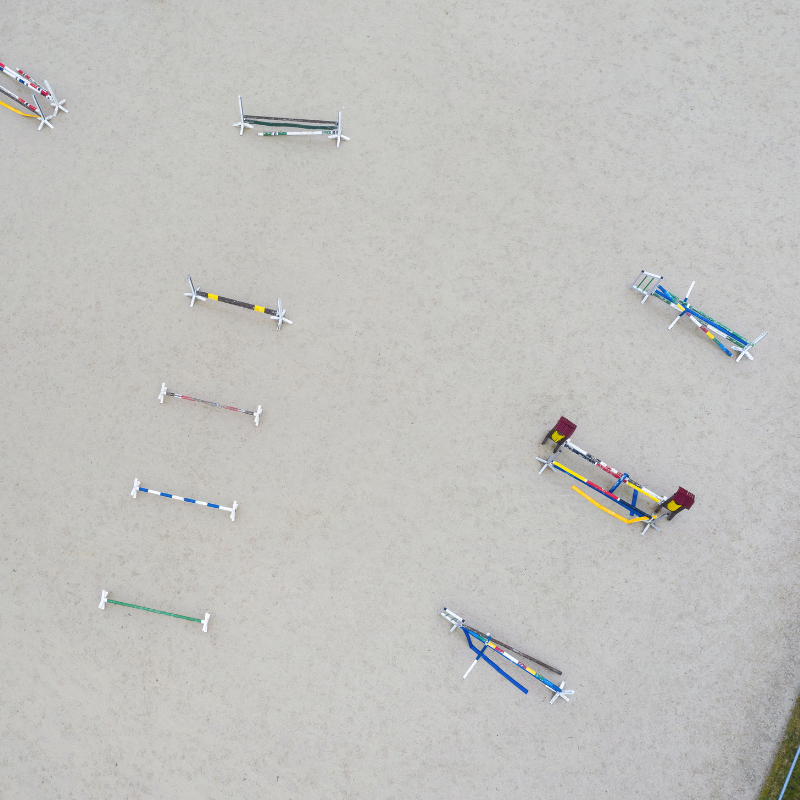
Include a Gymnastic

If your ring is large enough, consider adding a gymnastic line somewhere. This is a nice option that gives you the ability to mix it up so horses and riders are doing more than practicing courses. Gymnastics are an excellent way to work on straightness and adjustability. Depending on the difficulty of the gymnastic, it can be a great exercise for riders of multiple levels and disciplines.

Setting an effective course requires both planning and heavy lifting so make sure to recruit some barn friends to help!

Have questions about utilizing BarnManager or want to give it a try for yourself? Request a live demo here!
BarnManager is designed to be a part of your team, with the compatibility and credentials necessary to improve communication, simplify the management of horses, and get you out of the office, off the phone calls, and into the barn with the horses you care about! Click here to get a free demo and find out more!

Tips for Walking a Jumper Course

Jumper courses are often technical and include lines where riders have several options for track and striding. For this reason, understanding how to effectively walk a jumper course to come up with a successful plan for the show ring is essential. BarnManager spoke with U.S. Olympic silver medalist and international grand prix rider Peter Leone to learn his tips for walking a jumper course.

Know the Format

The first step to walking a course is knowing the type of competition. When I walk a course with a student, I always ask them what kind of class it is, and I expect them to know the answer. Knowing the format tells us how we need to walk that course in order to strategize how to win and be competitive. For example, I’m going to have a different plan for a speed class than I would for a class with a jump-off.

Make a Strategy Based on Your Horse

It is important to take into account your horse’s strengths and weaknesses during a course walk. When I walk a course with a student, and it’s a jump-off or speed class, I’ll explain the striding, turns, and angles the winner will do. We then take that information and personalize it to their horse based on its strengths and weaknesses. Strengths to think about could be the horse is brave, quick, slow with a big stride, or careful. On the other hand, we also consider if the horse is spooky, jumps hard to the left, or is very aware of and drawn to the in-gate.

Anticipate How Your Horse Will React to the Jumping Questions Being Asked

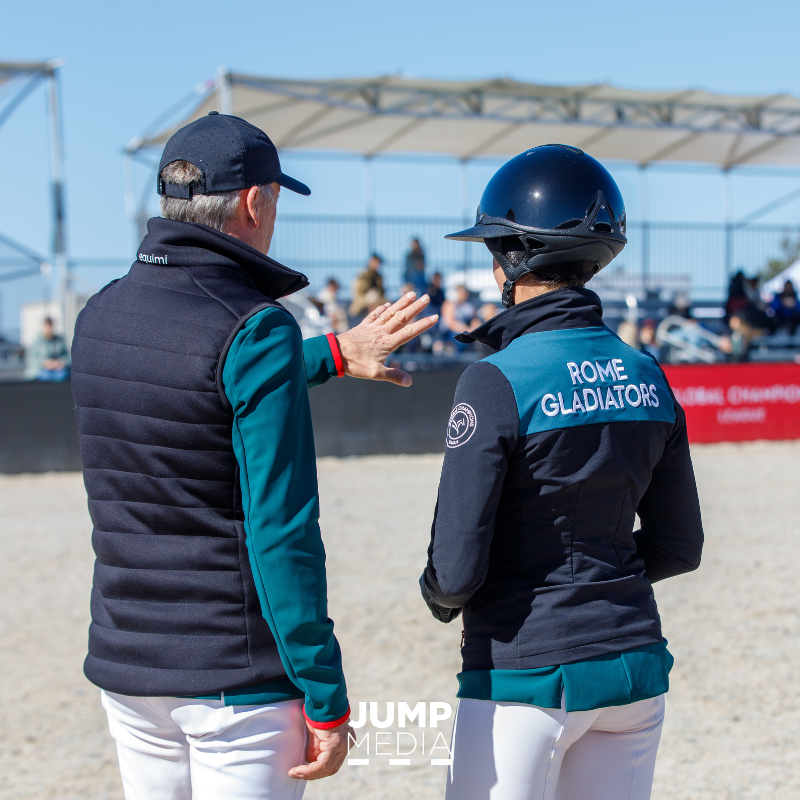
Photo by Jump Media

It is important to consider how your horse will react to different jumps in the arena. If you have to jump a spooky wall heading into the end of the ring, ask yourself how you think your horse will react to that. If your horse is the type to shrink back and be hesitant about boldly approaching that fence, then understand that jump could be a problem and come up with a plan for how you, as a rider, can help your horse. For example, I would make sure to get straight to that jump, have a short, active canter, good connection, and also let my horse see it during our entrance. Another fence you may have to consider during a course walk is a plain, airy plank. The careful, attentive horses will pay attention to the plank, but the big brave horse will not give it the same amount of respect. So, when you are walking the course make sure to think about what you can do to make your brave horse pay attention to that jump and give a good, clean jumping effort.

Jump location is another important factor to look at during a course walk. Anticipate how your horse will react to a jump going toward the in-gate versus one going away from the in-gate. Look for jumps on tricky angles or blind turns and come up with a plan for how you can give your horse the best chance of jumping the fence clear.

Look at Footing Conditions

The course walk gives you an opportunity to see what the footing conditions are like. You can identify if the ground has a nice texture, if it is firm, or if it gives way on the turns. At the majority of competitions now the footing is so good that horses’ strides are longer than we expect. Oftentimes when we walk a line and think it will ride long, it ends up riding normally. This is because of how much the footing has improved over the years, so it is something we should think about when walking a course.

Pick Spots To Save Time

During your round, you will not jump every fence dead center, especially when you are going against the clock. When you are walking the course, you should pick particular spots on the fences that you aim to jump. When walking a broken line or a line to a line, always walk a 12-foot stride and the direct track first as opposed to the wider bending track. A direct line will help save time so only put big bends in your broken lines if you have to. Identify other places where you can cheat the clock and be under the time allowed. This might be turning on landing and galloping over to the next jump or making a tighter turn to a jump that is friendly and relatively low risk in terms of having it down. If you can cheat the clock in certain places, then you can take time to those trickier obstacles or combinations that need a more respectful approach.

Make a Smart Entrance

While walking your course you should also consider your entrance. Preloading, when allowed, and making a smart entrance is to your advantage. When you enter the ring, make sure to let your horse see those critical fences or possible problem areas in the course. When deciding your entrance, you should factor in your particular horse and what you think would be most beneficial for them to see such as a combination or spooky oxer.

No matter the height or level of track you are riding, coming up with a solid and effective plan during the course walk will go a long way to helping you have success in the jumper ring.

Have questions about utilizing BarnManager or want to give it a try for yourself? Request a live demo here!
BarnManager is designed to be a part of your team, with the compatibility and credentials necessary to improve communication, simplify the management of horses, and get you out of the office, off the phone calls, and into the barn with the horses you care about! Click here to get a free demo and find out more!

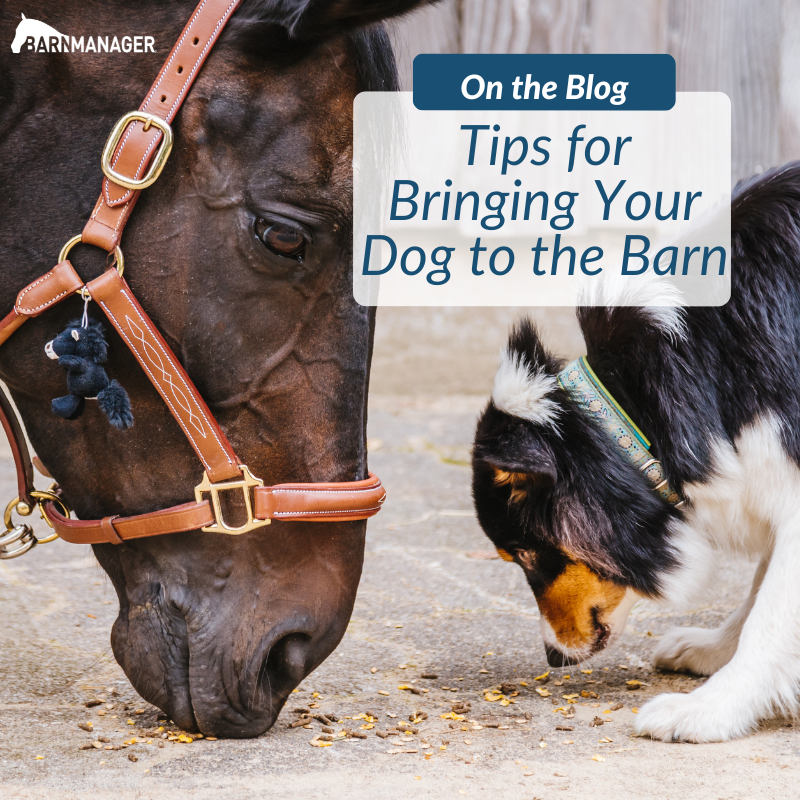
Tips for Bringing Your Dog to the Barn

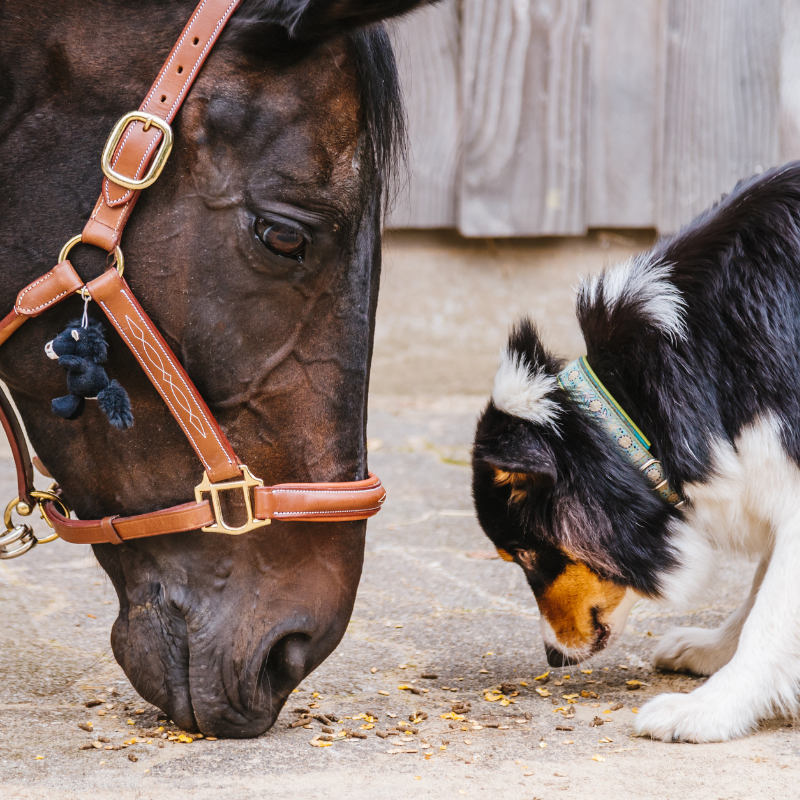
Many people have dogs that go everywhere with them, including the barn. If you work at a barn or plan to spend the majority of your day there it is nice to have your dog with you. Although dogs often can be seen running around freely at stables, there are rules that should be followed in order to do this safely.

Check for Barn Rules

Before you decide to bring your dog to the barn ask the owner and/or trainer about their rules for allowing dogs on the property. Do not assume you know the rules because every stable is different. Some barns do not allow dogs at all, while others will allow dogs but only on a leash. Even when the owner or trainer brings their dogs to the barn, that may not mean other people’s dogs are permitted.

Know Your Dog’s Behavior

Even if your barn allows dogs, think hard about how your pet might react in that environment. For example, consider your dog’s behavior with other animals, people, kids, and in a busy environment. If your dog gets anxious easily, is not good on a leash, or wanders off then bringing them to the barn may not be wise. Knowing how your dog may react under these conditions is important for everyone’s safety. Consider bringing your dog for a trial run on a day when you can spend time with them. Keep your dog on a leash and observe their behavior and reactions before deciding whether another visit will work. Also consider spending time reviewing basic training skills with them while you are in the barn environment.

Safety First

Even if you have a well-behaved dog, you must still take certain precautions to ensure the safety of others at the barn. For example, if someone is getting on a spooky or green horse and your dog is lying next to the arena, it may be best to move them away so they do not accidentally scare the horse. Similarly, do not let your dog roam free in or near the ring when a beginner is getting on to ride. Even the best-behaved dogs can have moments where they decide to chase after a bird or bark at a squirrel, and you do not want to be responsible for someone falling off their horse because of your dog. Remember that you are accountable if your dog spooks a horse, bites a person, or chews on a tack trunk. Although these are worst-case scenarios and many dogs successfully spend time at the barn, it is necessary to consider and understand the risks.

Also think about safety concerns for your dog when you bring them to the barn. You do not want them to get kicked by a horse or eat something poisonous. Always keep an eye on your dog, especially if they are loose, in order to prevent a dangerous situation from occurring.

Make Sure Your Dog Is Comfortable

If your dog is going to spend time at the barn be sure they are comfortable first. You may want to purchase a bed, water bowl, or pen that you can set up so they can rest and feel safe. Even if you decide you are comfortable allowing them to be loose most of the time, it is nice for your dog to have a quiet spot that is theirs, especially during times when they cannot roam free.

While spending the whole day with your horse and dog sounds ideal, it is important to acknowledge the responsibilities that come along with bringing your dog to the barn.

Have questions about utilizing BarnManager or want to give it a try for yourself? Request a live demo here!
BarnManager is designed to be a part of your team, with the compatibility and credentials necessary to improve communication, simplify the management of horses, and get you out of the office, off the phone calls, and into the barn with the horses you care about! Click here to get a free demo and find out more!

Tips for Walking an Equitation Course

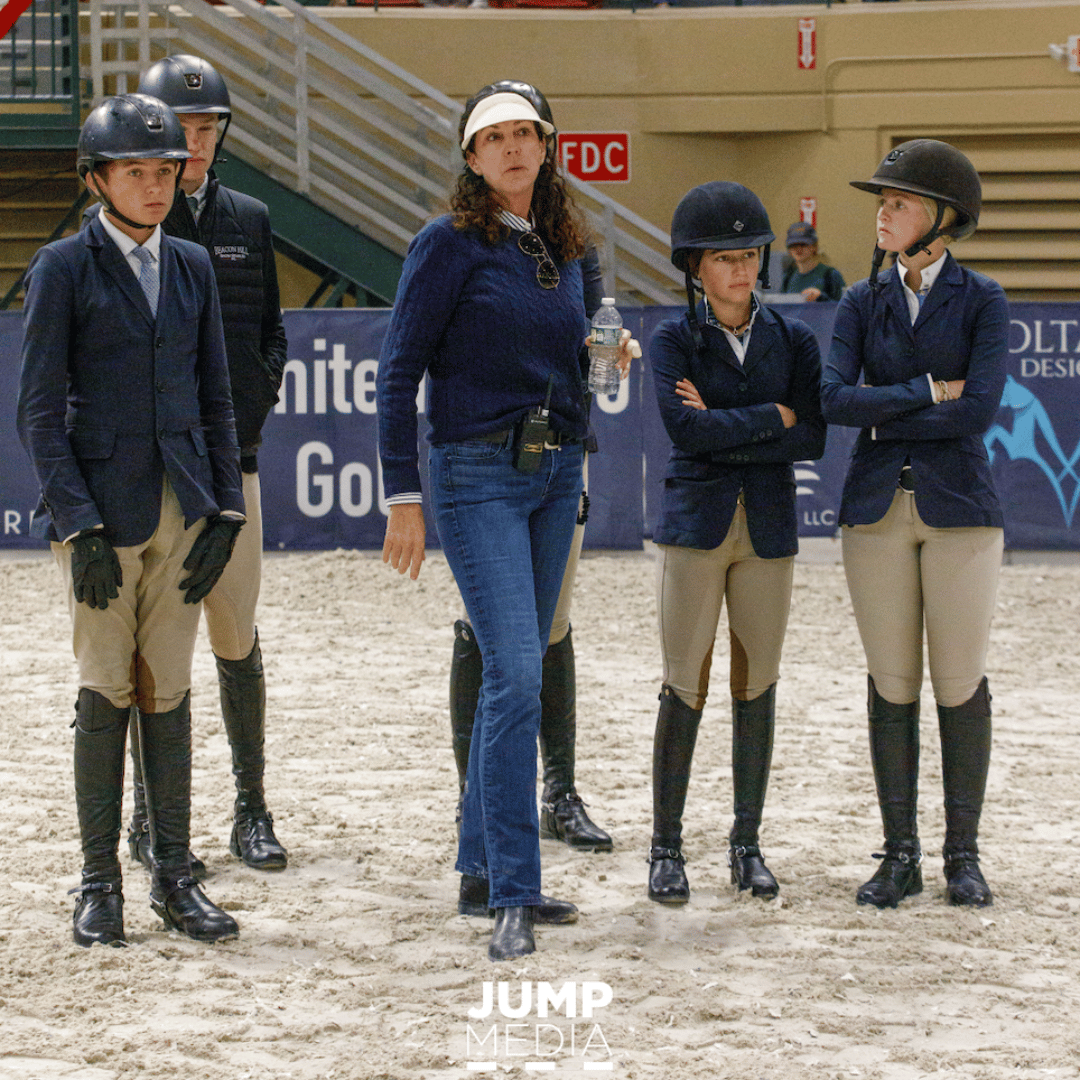
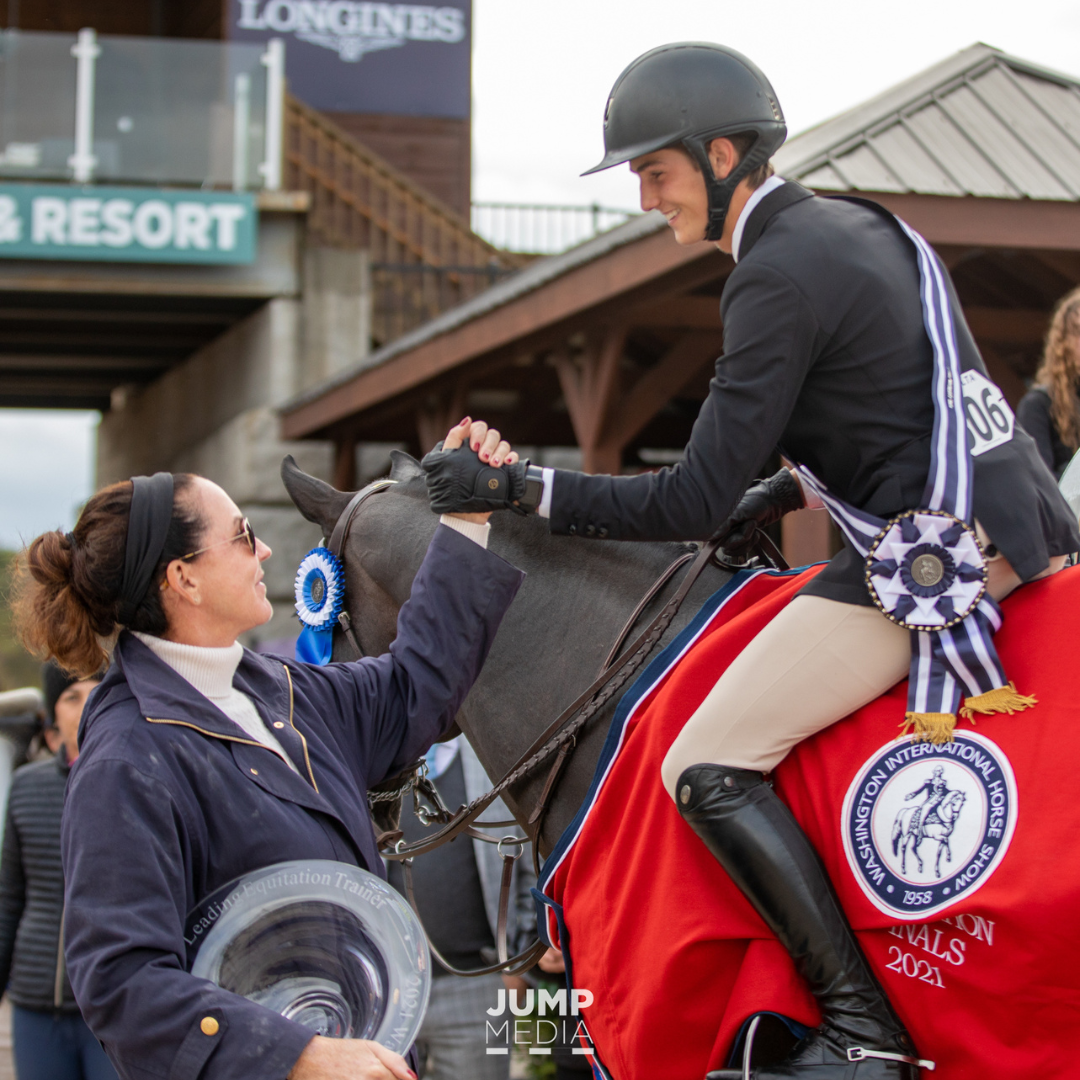
Properly walking a course ahead of your class is a skill that takes time and practice. It is more than just counting strides between fences, especially in the equitation divisions. BarnManager talked with accomplished hunter, jumper, and equitation trainer Stacia Madden of Beacon Hill Show Stables to learn about her recommendations for walking an equitation course.

Walk the Course and Then Walk It Again

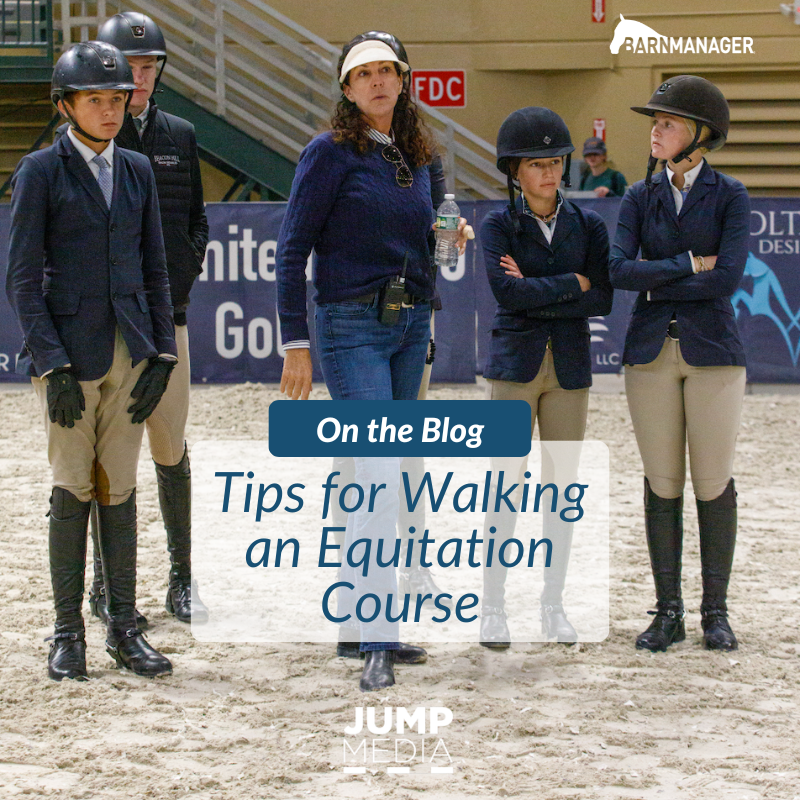
Photo by Jump Media

The first time I walk a course, I try to walk it separately from my students, and then I walk it again with them. I like to walk separately from my riders first to allow them to come up with their own plan rather than relying on me to tell them what I think of the course. When we walk together I never single anyone out, but I quiz the riders on what they walked and why. I also go over what I walked and why so we can have a discussion. I like to rewalk courses or certain parts of the course multiple times because I find my step at the beginning of the walk is not quite as open as the end. So, if I’m questioning a first line I find it especially important to rewalk it before I make my decision.

Come Up With Contingency Plans

When I develop a plan with my students while walking a course I often explain how I would send a rider into the ring if they were to go first, and I explain my reasoning. Then I point out the parts of the course I think could potentially change if the rider is later in the order and can watch other riders go. I ask my students to walk the course both ways so they are prepared for both situations.

Understand the Reasoning

At the end of a course walk, I think it is important for riders to know the plan and understand the reasoning behind it. When I walk a course with my students I try to explain as much as I can so they can learn why I think a line or track should be ridden a certain way. I want them to feel confident and understand they have all the tools they need. Practicing this thinking helps prepare them for times when they have to walk courses by themselves at the Platinum Performance/USEF Show Jumping Talent Search Finals and the Winter Equestrian Festival (WEF) Equitation Championship, or in situations where their trainer can’t make it to the ring. I never walk a course and just say, “You’re going to do a bending five, direct six, and inside turn.” I explain all the reasons and plans for different parts of the course.

Look for Horse-Specific Parts of the Course

Occasionally there are different ways to ride parts of a course depending on your horse. If I think there is a line or section of the course that does not have to be ridden only one way I call it “horse specific.” I will explain how it is horse specific and why, and discuss the best plan for each type of horse. For example, I’m going to have the horses that jump hard left do a different striding than the horses that get quick through in and outs.

Photo by Jump Media

Show Up Prepared

I believe riders should know their course before their walk and not expect the trainer to tell it to them. I like to see if they notice things like a dotted line, specific instructions, or the test in the course. So much of this sport is mental so I’m always trying to make sure my riders are independent and have the tools to do it on their own.

Equitation courses can be extremely complicated and technical, which is why it is important to understand how to get the most out of a course walk. The more prepared you are before you get on your horse, the more confident you will feel walking into the show ring.

Have questions about utilizing BarnManager or want to give it a try for yourself? Request a live demo here!
BarnManager is designed to be a part of your team, with the compatibility and credentials necessary to improve communication, simplify the management of horses, and get you out of the office, off the phone calls, and into the barn with the horses you care about! Click here to get a free demo and find out more!

Tips To Monitor the Financial Health of Your Business

By Dora Bennett / Pro-Office Support LLC

In the equestrian business, we tend to spend the majority of our time in the stable, leaving little time for office operations that are essential to the barn’s financial health. Keep reading for tips from guest blogger Dora Bennett of Pro-Office Support LLC on important areas to monitor in order to effectively run your business.

Feeding Chart

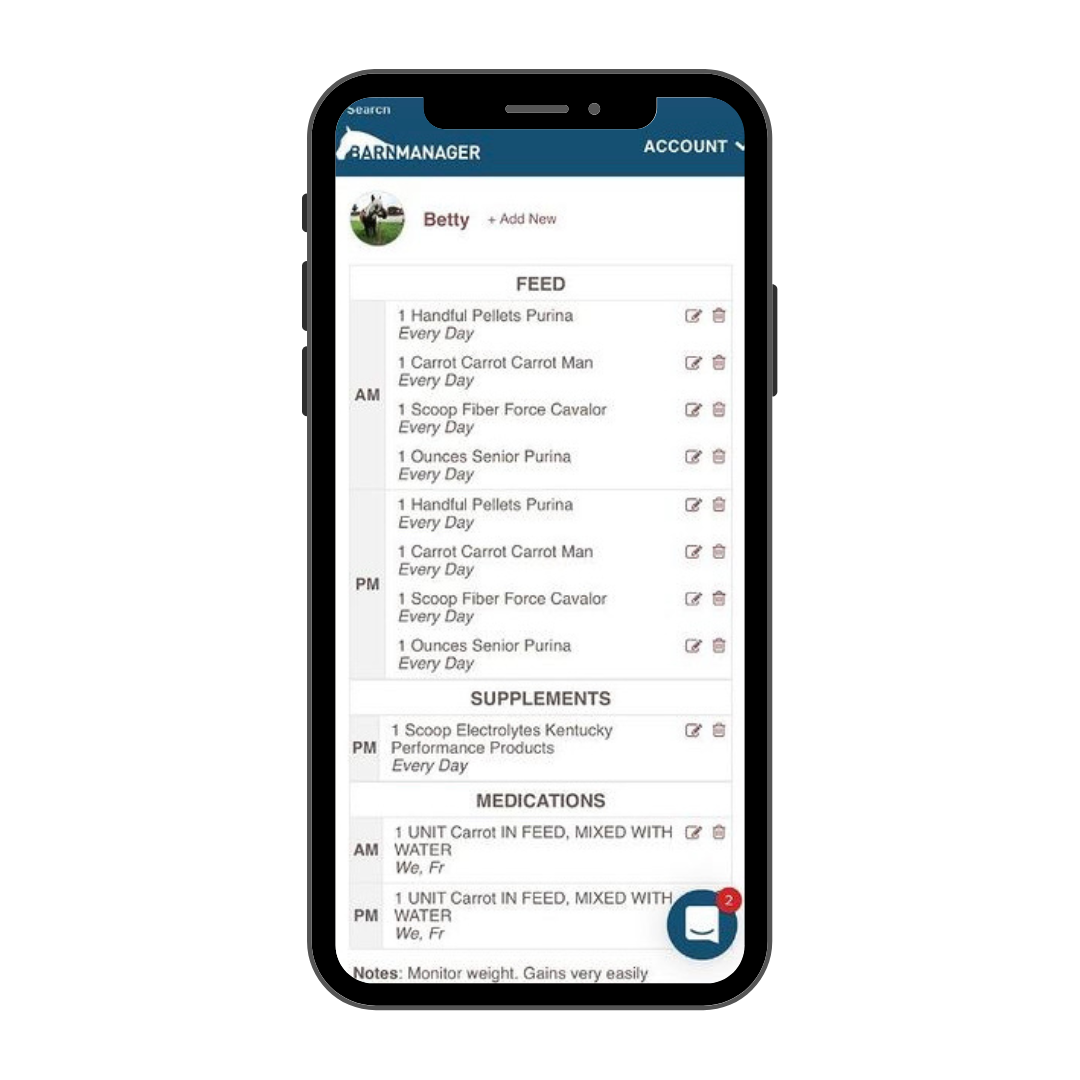
Every stable uses a feeding chart as an essential tool to keep track of changes in diet, medication, and supplements. It is important to proactively keep it updated for the health of the horses, but have you ever thought about how not billing those updates can affect the financial health of your business? Adjustments as simple as changing a horse’s grain, upping the amount of grain, or purchasing a supplement on behalf of a client can all have a financial impact on your revenue. The prices of grain and hay are always fluctuating. Neglecting to reflect an updated cost in your billing is something that is easily overlooked and causes the stable to absorb the increased cost. Constantly updating and managing your barn’s feed chart can be tedious but it is extremely important for the financial side of your business.
(Did you know? BarnManager has a feeding chart feature that allows you to update information, share changes with your staff, and make the adjustments easily available for billing.)

Training and Lessons

If your stable has a lesson or training program, it is necessary to keep track of each session for billing purposes. Managers, riders, and trainers must record each lesson or training ride in an organized system. This will ensure that you are charging for each session and sticking to the allotted time period. We all know the saying time is money, and this is the perfect example.
(Did you know? With BarnManager, users can quickly input each lesson or training ride into the calendar feature, which makes scheduling, planning, and billing a breeze.)

Boarding

Most barns offer boarding as a service. Some stables offer several boarding options to clients depending on the level of care and training they want. When was the last time you sat down to figure out the actual costs required to board each horse? Do this regularly to account for significant price changes for critical supplies like hay, shavings, and grain. Also, consider what items are included in your board to be sure you are properly billing for extra services you provide. If your barn includes all services in full-care boarding, make sure the fee takes all costs for those services into consideration. If you monitor these changes throughout the year, you will be better prepared to set your rates when it comes time to announce adjustments to your boarders.
(Did you know? With BarnManager Pro, users can analyze revenue and even break it down by client, horse, product, or service.)

Proper Management of Your Barn’s Books

Proper management of your barn’s books is essential to the financial health of your business. It is difficult for most busy stable owners to find time to work on the books, and it is often after a long day at the barn. When the financials are not well maintained, it is hard to properly understand the financial health of your business. Finding an accounting person, service, or software product that also understands the equestrian business can make this task much easier.
(Did you know? BarnManager Pro’s accounting and business management features help users more easily analyze the financial side of their business by simplifying the invoicing process, allowing safe and secure payments, and integrating with QuickBooks Online.)

Although these tasks are time-consuming and require consistency, they are essential for properly keeping track of your business’s finances. Thankfully, there are accounting services and software products, such as BarnManager, that can help you understand your barn’s financial health.

Have questions about utilizing BarnManager or want to give it a try for yourself? Request a live demo here!
BarnManager is designed to be a part of your team, with the compatibility and credentials necessary to improve communication, simplify the management of horses, and get you out of the office, off the phone calls, and into the barn with the horses you care about! Click here to get a free demo and find out more!

Six New Year’s Resolutions for Equestrians

Have you chosen your New Year’s resolution for 2023? If you are considering any equestrian-focused goals this year, keep reading for a few ideas from BarnManager.

Fix One Habit

Every rider has one bad habit they are always being reminded about during lessons. Instead of having a broad goal to become a better rider, try focusing on improving that one flaw. It may be something small like lowering your hands, not leaning to the right, or keeping your shoulders tall. Every time you ride, keep that one habit in mind, rather than a long list of things, and before long you will see progress.

Add More No-Stirrups Work to Your Routine

This year, try to make every month “No Stirrup November.” Begin with small steps, like adding it in for 5 minutes once a ride and then build from there instead of torturing yourself once a month or only doing it when your trainer asks for it in a lesson.

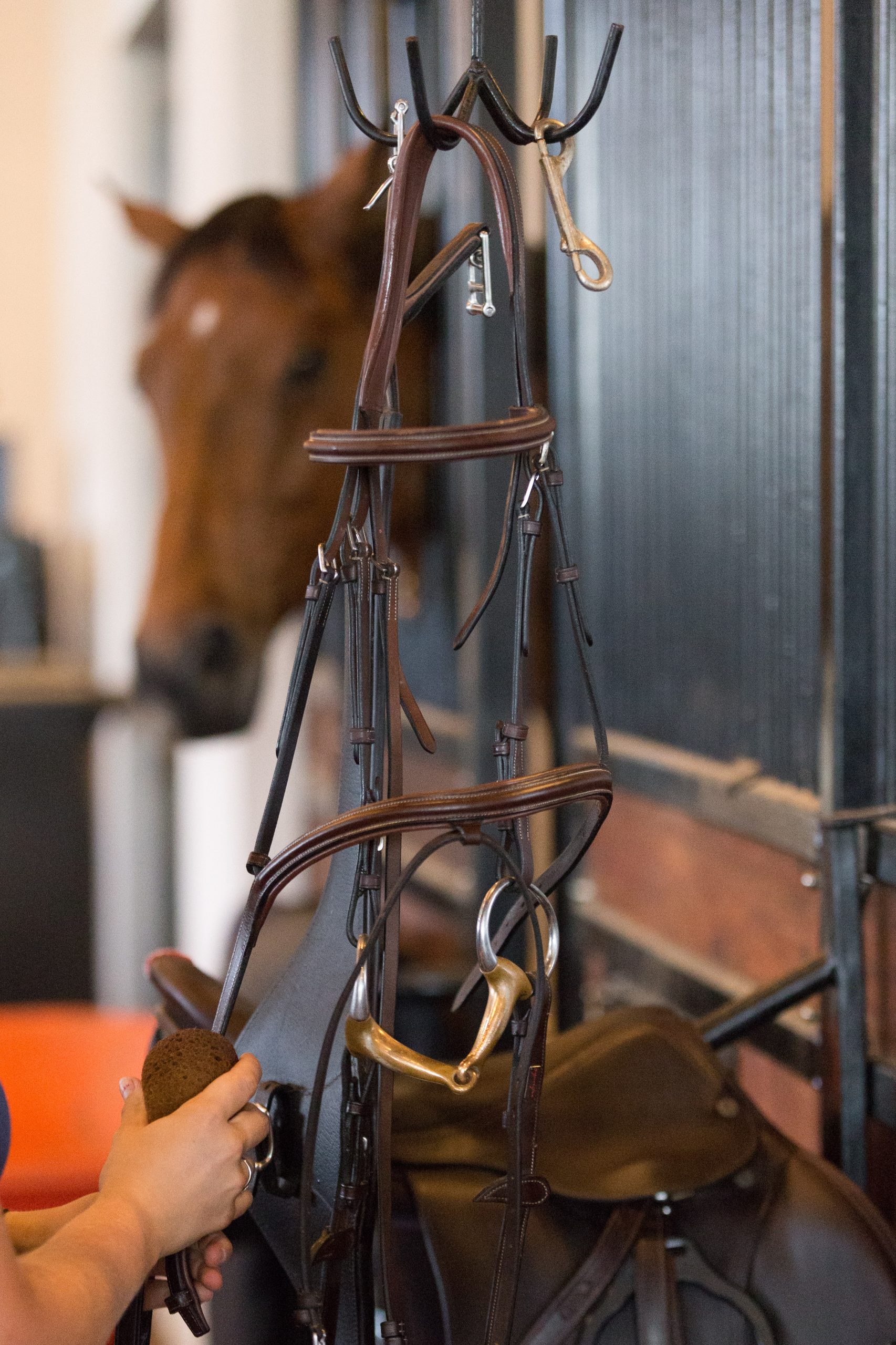
Take Care of Your Tack

Photo by Jump Media

Cleaning, oiling, and conditioning tack are extremely important tasks that often get skipped. Leather tack is expensive and the more regularly you take care of it, the longer it lasts. This year, make a plan to clean your saddle, bridle, martingale, boots, and other leather equipment after every ride and oil and condition the leather once a week.

Organize Your Paperwork

Organizing your horse’s or barn’s paperwork is a daunting task, but a necessary one. Making sure paperwork like health certificates and lease agreements are up to date and in an organized location is key. If you are organizing your barn’s paperwork, set aside time once a month to confirm all information is current, new horses have been added, and everything is still in the correct place.

(Did you know? BarnManager can help you organize all of your paperwork so that it is in digital form, easy to access, and readily available.)

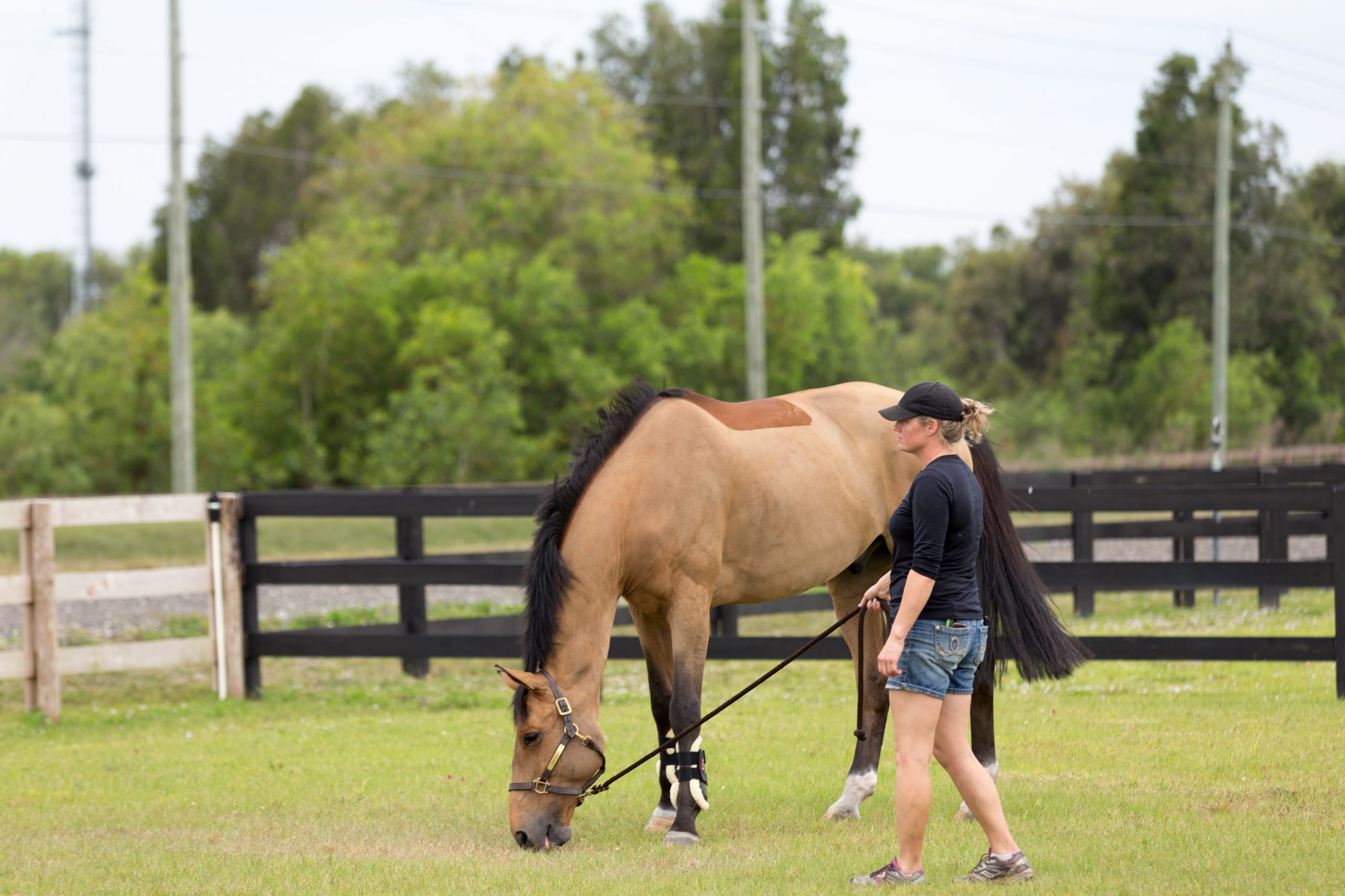
Spend More Quality Time With Your Horse

Whether you are a professional, junior, or amateur rider, you probably have a busy schedule that makes it hard to spend time with your horse. Between riding, showing, work, and school, finding free time to just be with your horse can be tricky. Promise yourself you will carve out a little time during most visits to the barn to groom, graze, or simply hang out with your horse. Even if it’s only for an extra 10 minutes, this quality time will give you both a well-deserved break to relax together.

Photo by Jump Media

Be Grateful

It is all too easy to compare yourself to other riders, owners, or trainers in this sport. This year, make a point to be grateful for the opportunities and horses you have instead of focusing on what others are doing. Everyone has their own path so make the most of yours and take time to be thankful for the horses and the people you have in your life.

For 2023, stick with a few simple, specific resolutions rather than big, overwhelming ones that are difficult to maintain. Before long, you will find your new year becoming more enjoyable!

Have questions about utilizing BarnManager or want to give it a try for yourself? Request a live demo here!
BarnManager is designed to be a part of your team, with the compatibility and credentials necessary to improve communication, simplify the management of horses, and get you out of the office, off the phone calls, and into the barn with the horses you care about! Click here to get a free demo and find out more!

Horse Show Highlights From 2022

As the year comes to a close, many enjoy the tradition of reflecting back on favorite moments. BarnManager caught up with three grooms and managers to share their highlights from the 2022 horse show season.

Caroline McLeese

Rider, Manager, and Assistant Trainer for Double H Farm, located in Ridgefield, CT, and Wellington, FL

Photo courtesy of Caroline McLeese

What was your favorite memory of 2022?
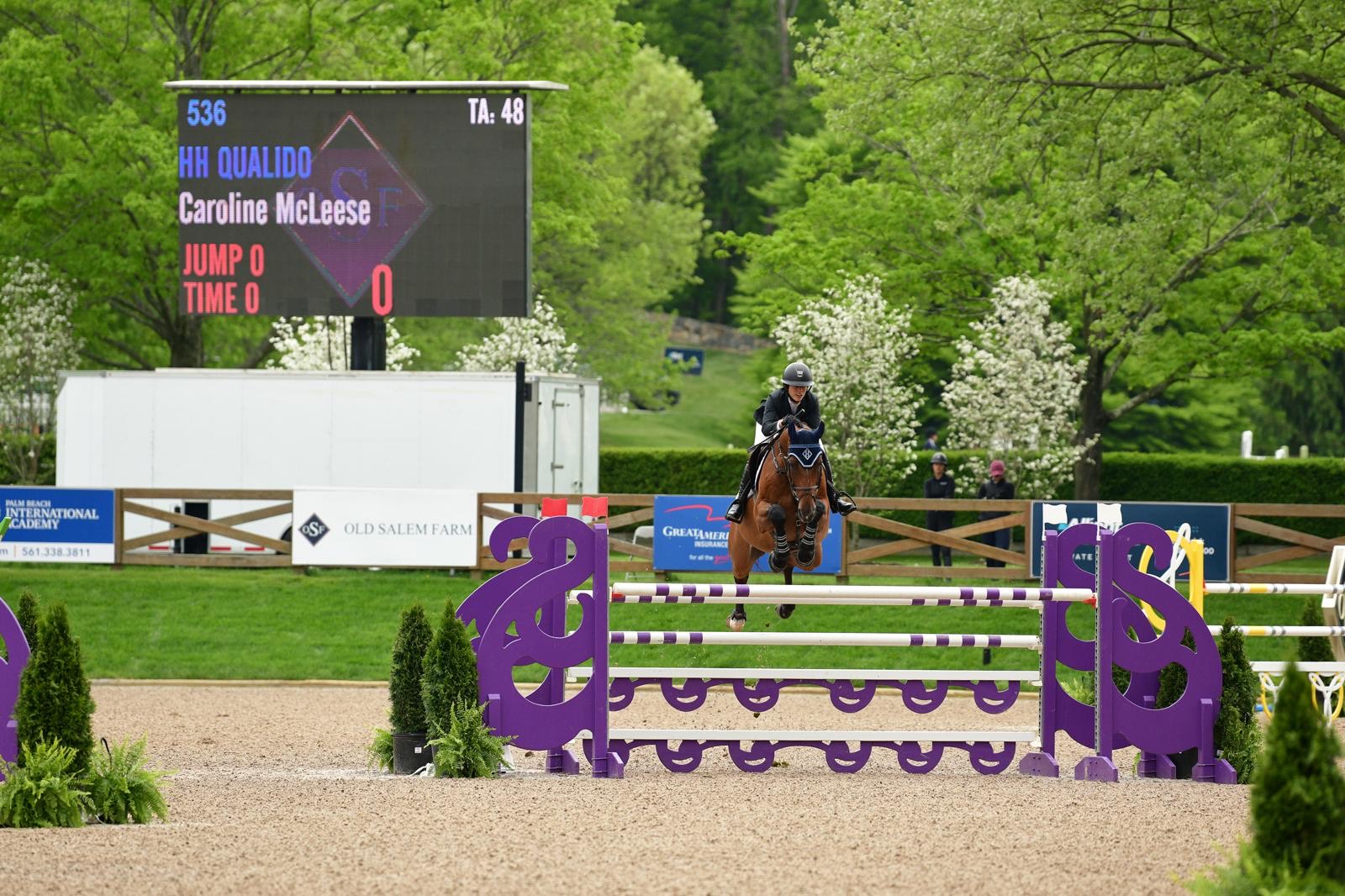
I had the opportunity to show one of Quentin Judge’s horses, HH Qualido, in a national grand prix at Old Salem Farm in North Salem, NY, this spring. We ended up double clear and third, which was an exciting result for our first bigger class together. McLain Ward won, and Rodrigo Pessoa was second, and being in the ring for awards with two riders who I have looked up to for my entire riding career made it even more special. On top of that, the whole Double H team had quite a busy day between showing and getting a few horses to the airport, and I was super impressed with how everyone kept things moving. It was one of those rare days where everything came together just how it was meant to!

What are you most looking forward to in 2023?
I have a horse to jump some two-star FEI classes with this year, Moncler van Overis. I’m really excited to keep getting to know him and see where we go together.

Stephanie Nell

Groom for Amethyst Equestrian, located in North Salem, NY, and Wellington, FL

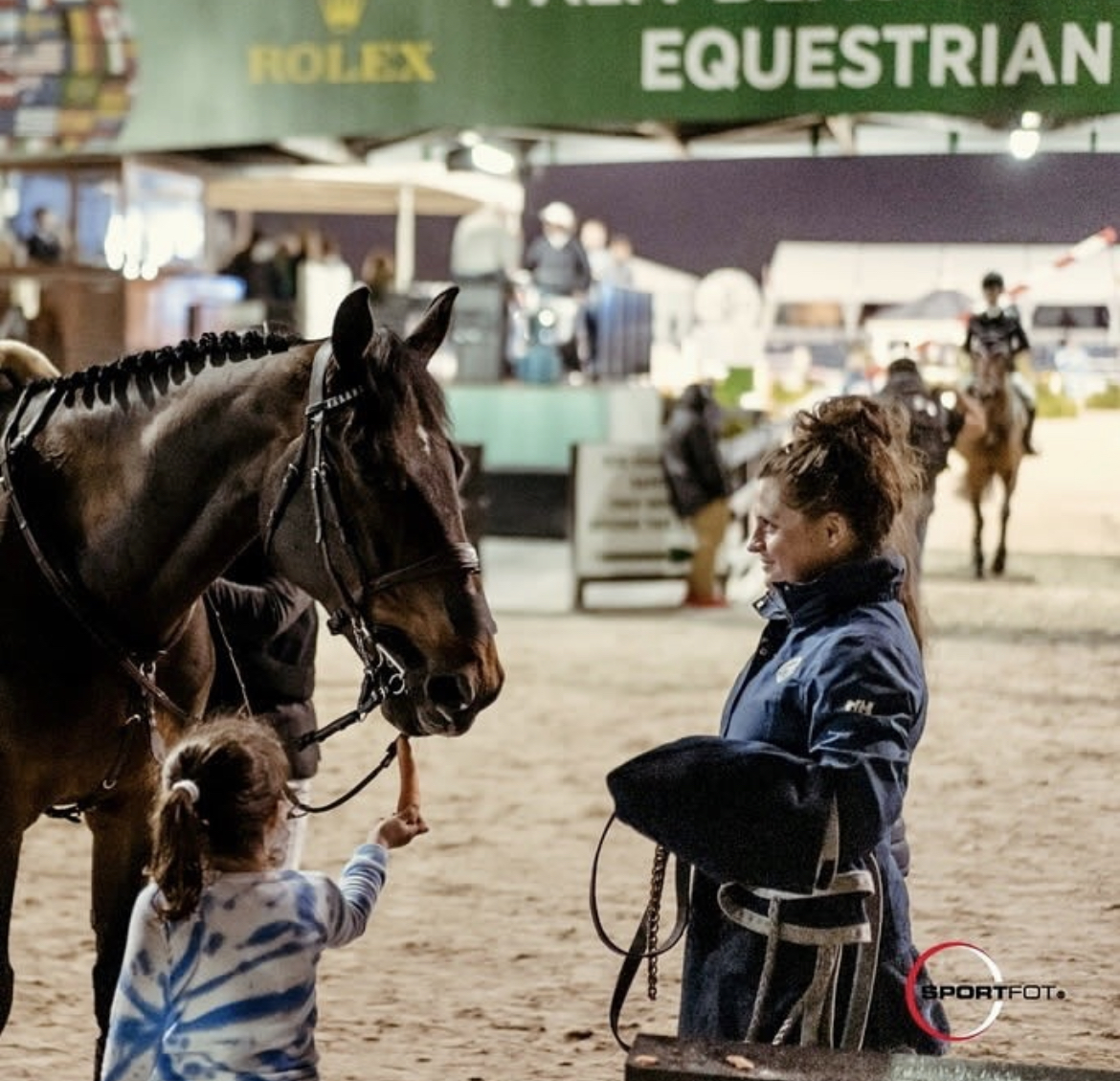
Photo by Sportfot

What was your favorite memory of 2022?
My favorite horse show memory from 2022 was from the beginning of the year when Rodrigo Pessoa and Lord Lucio finished seventh in the $216,000 NetJets Grand Prix CSI4* during Saturday Night Lights at the Winter Equestrian Festival in Wellington, FL. Lord Lucio is one of my favorite horses to take care of, so it was a very special night. I also love the exciting atmosphere during the Saturday Night Light classes.

What are you most looking forward to in 2023?
I am excited to now be grooming for Rodrigo and Alexa Pessoa’s student, Maison McIntyre. Maison is a junior rider who has a lovely string of horses ranging in different competition levels. This summer we are going to Europe to compete, so I’m really looking forward to that trip.

Kimberly Graves


Former Groom for John French, located in Wellington, FL

Photo by Jump Media

What was your favorite memory of 2022?
My favorite memory of 2022 would definitely be World Champion Hunter Rider (WCHR) week at the Winter Equestrian Festival in Wellington, FL. The $100,000 United States Hunter Jumper Association/WCHR Peter Wetherill Palm Beach Hunter Spectacular night class lived up to its name. It was truly spectacular. I had two horses in the class, Babylon and Milagro. They are both young and promising horses. It was my first time grooming horses for the class. I have watched this class in person and on live stream since it was available, and I have followed the sport and hunters since I was nine years old. I always dreamed of being a part of this night with a special horse or rider, and this year that dream came true. John French rode Babylon to an eighth-place finish that night for owners Ariana Marnell and Marnell Sport Horses. Just taking care of a special horse that qualified for that class was a check off my bucket list. I also had the honor of accepting the Mark Gregory Award for the best-conditioned horse of the first round of the class for Babylon and Marnell Sport Horses. That was the icing on the cake. I always take great pride in making sure the horses I care for are healthy, happy, and shiny!

What are you most looking forward to in 2023?
I’m looking forward to starting a new chapter in 2023. I’ll be looking to find a new team to join in the new year. I’m also looking forward to checking more boxes off my bucket list like going to Devon and all of the indoor shows.

Have questions about utilizing BarnManager or want to give it a try for yourself? Request a live demo here!
BarnManager is designed to be a part of your team, with the compatibility and credentials necessary to improve communication, simplify the management of horses, and get you out of the office, off the phone calls, and into the barn with the horses you care about! Click here to get a free demo and find out more!

DIY Equestrian Holiday Gift Ideas

The holiday season can be an expensive time of year, especially when shopping for equestrians. Instead of buying lots of pricey, store-bought items, consider making personalized gifts for your horsey friends. Read on for some DIY equestrian holiday gift ideas from BarnManager.

Homemade Horse Treats

If baking is your specialty, then gifting your friends, trainers, managers, or grooms with homemade horse treats is a wonderful option. For an extra-special touch, put the horse treats in a decorative box or mason jar and add a bow. This is a great gift to pair with a card and maybe a few chocolate treats for your human friends to enjoy.

Ornament

Deciding to make horse-themed ornaments gives you the flexibility to try lots of creative approaches. One option is to cut a horse figure or head out of felt and decorate it. If you are good at sewing, you could add stuffing between two pieces of horse-shaped felt to create a stitched ornament. Constructing a horse figure out of corks and decorating it with materials such as yarn and craft pipe cleaners is also another way to make this present. If you would like to make it more personal, buy a tiny picture frame, insert your friend’s favorite photo of their horse, and glue it on a string to make it an ornament.

Horseshoe Wall Hanger

Try out your woodworking skills by making a homemade horseshoe wall hanger. Start by collecting a few old horseshoes and nail them to painted wooden boards. This gift can be as simple or creative as you choose depending on how crafty you feel and how decorative you want it to be.

Wooden Grooming Box

This DIY present is also best for those who enjoy woodworking. If you have some time and enjoy making things, this is a great gift for your favorite groom. If you are not skilled enough to make your own, consider buying a premade one and painting or decorating it for a personal touch.

Decorative Picture Frame

If you are not the best at arts and crafts, consider buying a plain picture frame to decorate. You could paint the frame and even add your friend’s horse’s name at the top or bottom. Paint little horseshoes or ribbons on the frame, or glue on a few tiny equestrian-themed items from the craft store. If you purchase a larger frame to hang on a wall, consider adding a string to the bottom where ribbons can be hung.

Photography Session

If photography is your art of choice, a personal photography session can be a very special gift for your friends, trainers, managers, or grooms. After the session, choose a few special photos to print out and frame for them. If you photograph several people at the barn, you could even make a scrapbook for everyone.

Instead of buying run-of-the-mill presents this year, go the extra mile and gift your friends, trainers, managers, and grooms with homemade and personalized goodies.

Have questions about utilizing BarnManager or want to give it a try for yourself? Request a live demo here!
BarnManager is designed to be a part of your team, with the compatibility and credentials necessary to improve communication, simplify the management of horses, and get you out of the office, off the phone calls, and into the barn with the horses you care about! Click here to get a free demo and find out more!

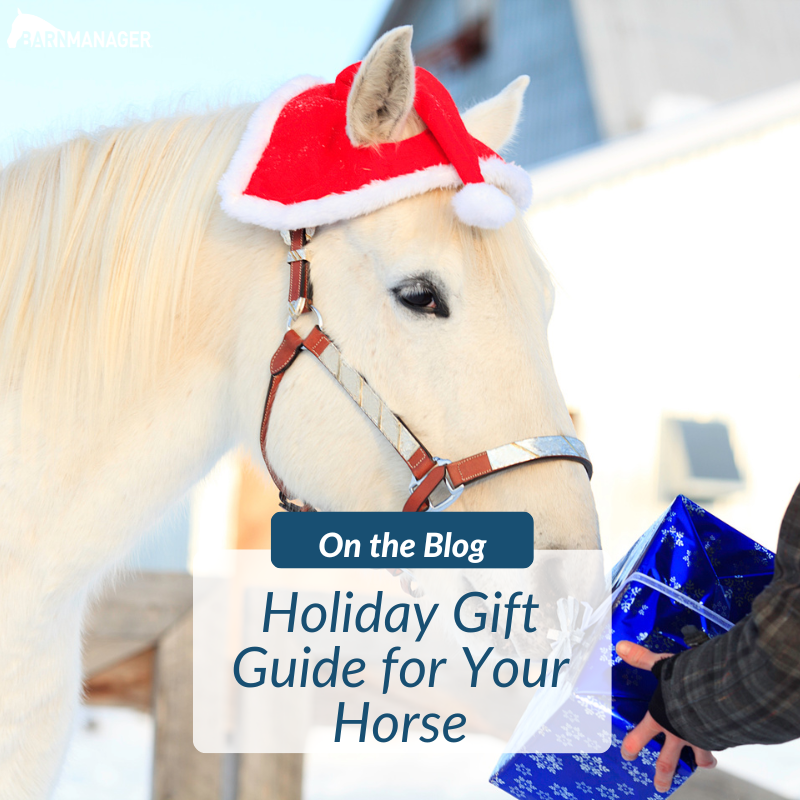
Holiday Gift Guide for Your Horse

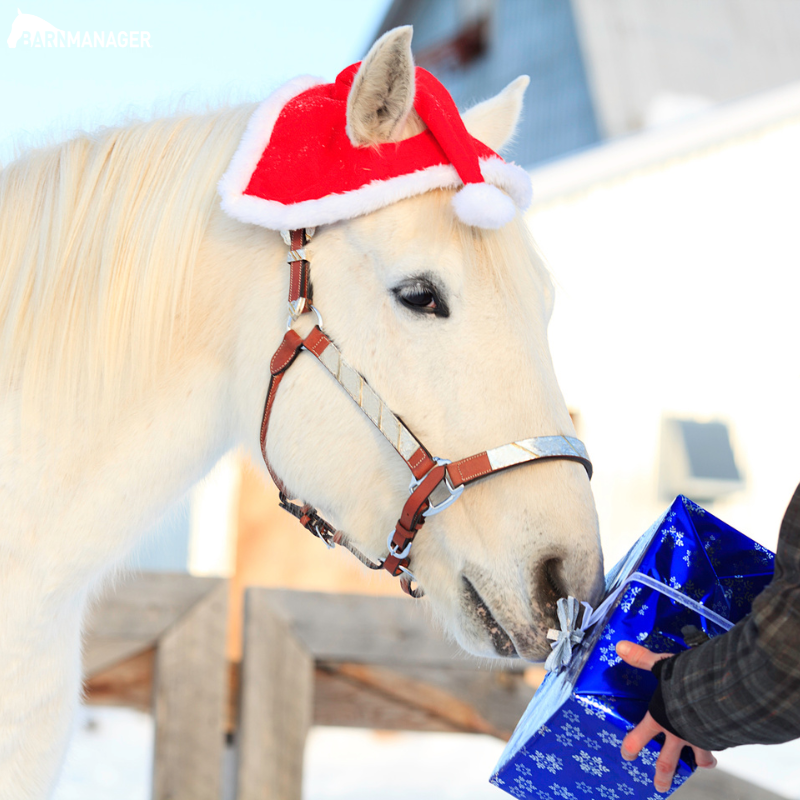
The holiday season has officially arrived, so it is time to start searching for the perfect present for your horse. While horse treats are an obvious choice, you may want to give your favorite equine partner something a little more special this year. Keep reading for a horse holiday gift guide from BarnManager.

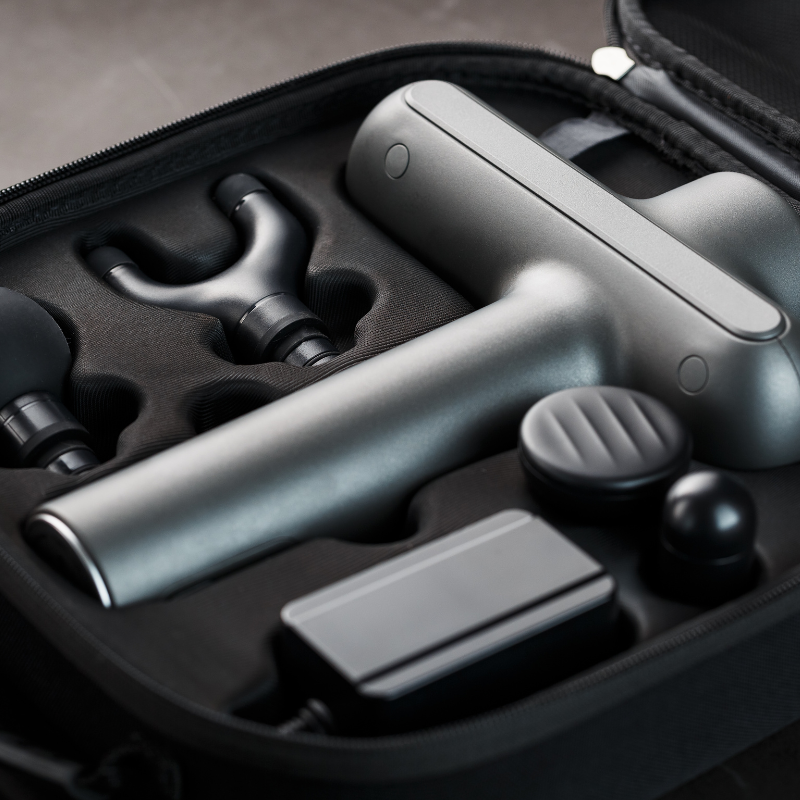
Massage Gun

Help your horse feel their best by gifting them a hand-held massage gun. While a full massage blanket may be too pricey of a present, massage guns are a more affordable option. Although mainly marketed for human athletes, massage guns can also be very beneficial to horses before and after exercise. Bonus, you can use it too!

Coat Conditioner

Investing in a quality coat conditioner for your horse is an excellent choice. There are several options you can find online or at your local tack store. Check the ingredients before purchasing to make sure there is nothing harmful or drying in the product. Also, take a quick look at online reviews or ask your barn friends which coat conditioning products they like best.

Quarter Sheet

If you stay in a colder climate during the winter, a quarter sheet is a great present to help ensure your horse stays warm during exercise. This extra layer while you ride can make a big difference in keeping your horse comfortable during those freezing days. Some online tack shops allow you to customize your quarter sheet so you can purchase it in your barn’s colors.

Grooming Gloves

Grooming gloves are a terrific gift if your horse loves being brushed. While many people use mitts and curry combs, these actual gloves help you work comfortably on every part of your horse’s body, which is also a nice way to give your horse a little massage treatment before and after riding.

Hanging Stall Toy

If you have a horse that gets bored easily, they may really appreciate a hanging toy for their stall. While some toys are edible, others are designed for them to chew on and play with. This gift can come in handy to help keep your horse occupied when turnout time is limited because of snow or ice.

Horses are always there for us on good days and bad, so finding them the perfect holiday gift is a must. Happy gifting and happy holidays from BarnManager!

Have questions about utilizing BarnManager or want to give it a try for yourself? Request a live demo here!

BarnManager is designed to be a part of your team, with the compatibility and credentials necessary to improve communication, simplify the management of horses, and get you out of the office, off the phone calls, and into the barn with the horses you care about! Click here to get a free demo and find out more!

See Barn Manager in Action

Ready to streamline your barn’s operations?


Book a quick demo and discover how Barn Manager can save you time, keep your team organized, and give you peace of mind.