Things To Check For in Your Horse’s Paddock

Turning horses out is an important part of their everyday routine. During this time outside, horses can eat, graze, walk around, and just be horses. Since turnout is supposed to be a relaxing and enjoyable time for your horse, it is important to routinely inspect their paddock or field to ensure it is safe.

Holes

Holes in paddocks can be dangerous for horses and also difficult to notice from a distance. Large holes can definitely be a problem, although sometimes the smaller ones are actually more of a hazard. Holes that are large are easy for people to see and horses to avoid. The most dangerous holes are those that are hidden or smaller because horses can easily misstep into them and get injured. For this reason, it is best to walk your paddocks regularly searching for holes so they can be filled in. If you have grass paddocks, it helps to keep them mowed so holes are easier to see.

Fencing
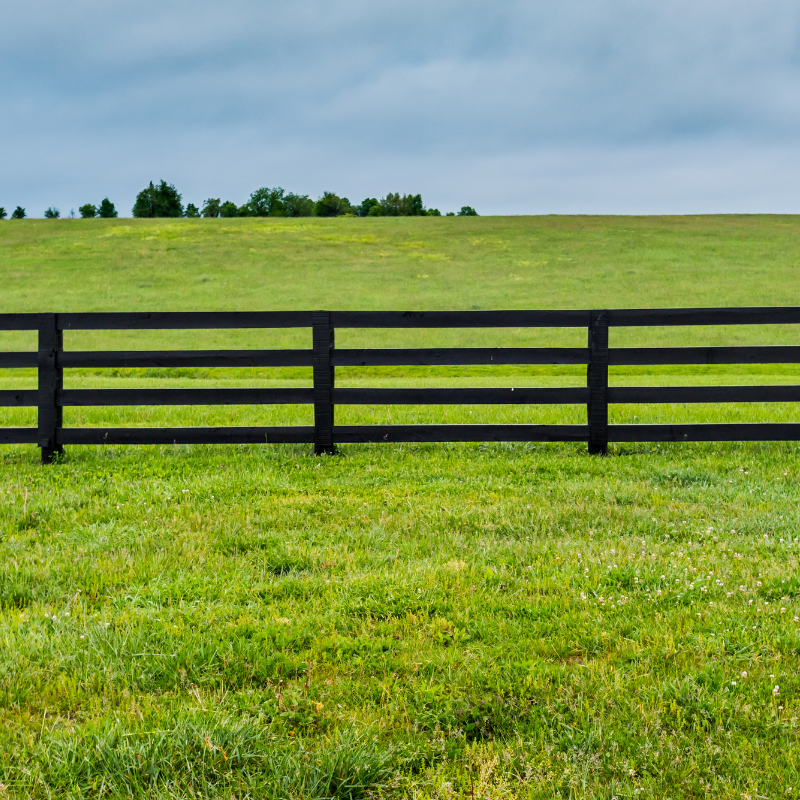
Horses often itch on or lean over the fence boards in their paddock. This can lead to broken fence boards that are dangerous for several reasons. If a horse continues rubbing on a broken fence board, they could cut themselves on the splintered wood or an exposed nail. If any of the nails fall, there is the possibility that a horse could step on one. A broken fence board may also create a place where a horse could escape. To avoid these issues, make it a practice to walk the fence lines of your turnout areas frequently to examine them. Also, keep an eye out for rotting fence boards that could break and become a hazard.

Toxic Weeds

Toxic weeds can be a concern when your horse is turned out in a grass field. If you are unsure which weeds are toxic, check with a professional weed specialist. Horses are not always inclined to eat toxic weeds, but it is better to be on the safe side. Take good care of your pasture areas to prevent weeds from overtaking the grass. Your routine can include mowing frequently and rotating the fields that are used for turnout. Resting the grass, keeping it healthy, and giving it time to regrow will help keep weeds at bay.

Rocks

A rocky paddock is not ideal footing for a horse, especially if they are barefoot. If a horse steps the wrong way on a sharp rock, it can lead to a stone bruise. Depending on the location and terrain of the farm, it can be difficult to completely avoid rocks in paddocks. Instead, make it a habit to examine the turnout areas a couple of times a year and remove any large or sharp rocks that have surfaced. This can be a difficult task in large paddocks, so begin by focusing on the areas where the horses tend to stand the most. Most likely these areas will be by the gate and where there is food, water, or shade.

Weather
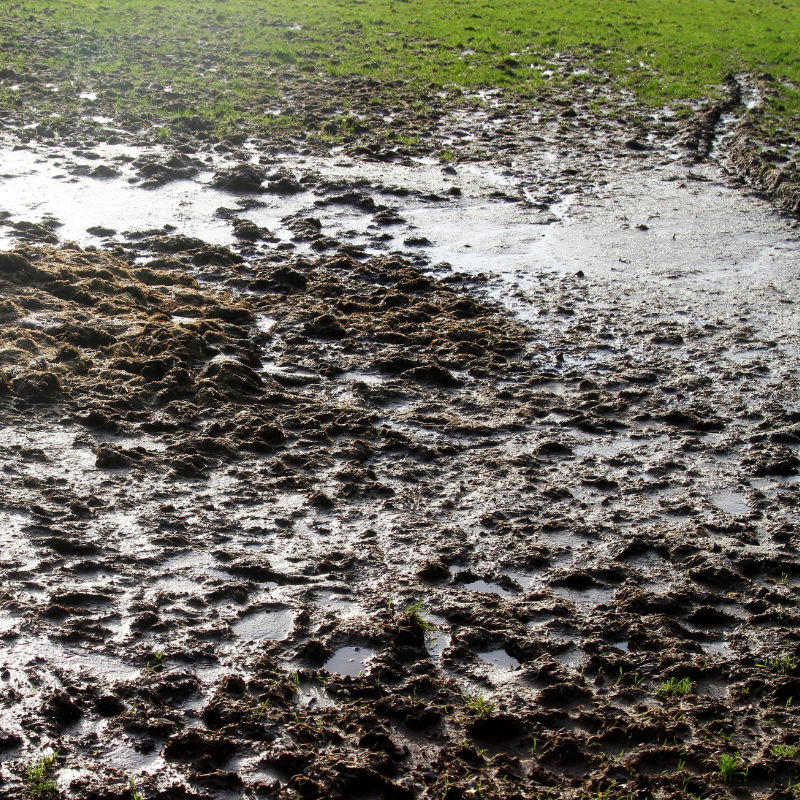
The weather during different seasons can affect the conditions of your paddocks. For example, ice can be a major issue in the winter. Icy areas can be dangerous for both the horse and the person who is walking the horse to the field. Rain is often problematic for paddocks in the spring, summer, and fall. A muddy paddock can be slippery and hazardous if your horse starts to play or run. There is also a higher chance of a horse pulling a shoe in the mud, which could lead to them accidentally stepping on a nail. Additionally, turning a horse out in a grass paddock after the rain can tear up the field, especially if the horse starts running. No matter the season, when possible it is best to avoid icy or wet paddocks for a little until they are thawed, dry, and safe.

Although pasture examination and maintenance might be a tedious and dull task at times, it is necessary to ensure that your horses are in a safe environment when they are in turnout so find a way to include it in your maintenance schedule throughout the year.

Have questions about utilizing BarnManager or want to give it a try for yourself? Request a live demo here!

BarnManager is designed to be a part of your team, with the compatibility and credentials necessary to improve communication, simplify the management of horses, and get you out of the office, off the phone calls, and into the barn with the horses you care about! Click here to get a free demo and find out more!

What To Know at an FEI Show: The Warm-Up

A successful warm-up is the key to a winning performance in the competition ring no matter what discipline. At the international level in a Fédération Equestre Internationale (FEI) show, there are particularities to be aware of when warming up. Being mindful of the specifics will ensure your warm-up goes smoothly and according to plan. For more information about regulations in the FEI stabling area, read part one of BarnManager’s What to Know at an FEI Show blog here.

10-Minute Area

For international dressage competitions, there is a 10-minute area, which is a designated space in the larger warm-up ring. This area serves as the last practice ring before entering the competition arena. Though riders are not required to use this space, there is only one athlete permitted in the 10-minute area at a time. This allows the next competing rider space to prepare any movements without the interference of other horses.

Order of Go

Since there is a set order of go, warm-up obstacles for cross-country and jumping are made available according to that list. If there are four warm-up jumps available, the next four riders to compete will be using those obstacles. When you are with the fifth horse in the order, you should plan to use the jump that the first horse is using once they are finished. An FEI steward in the warm-up area can help you if you are unsure of the order.

Jump Setting

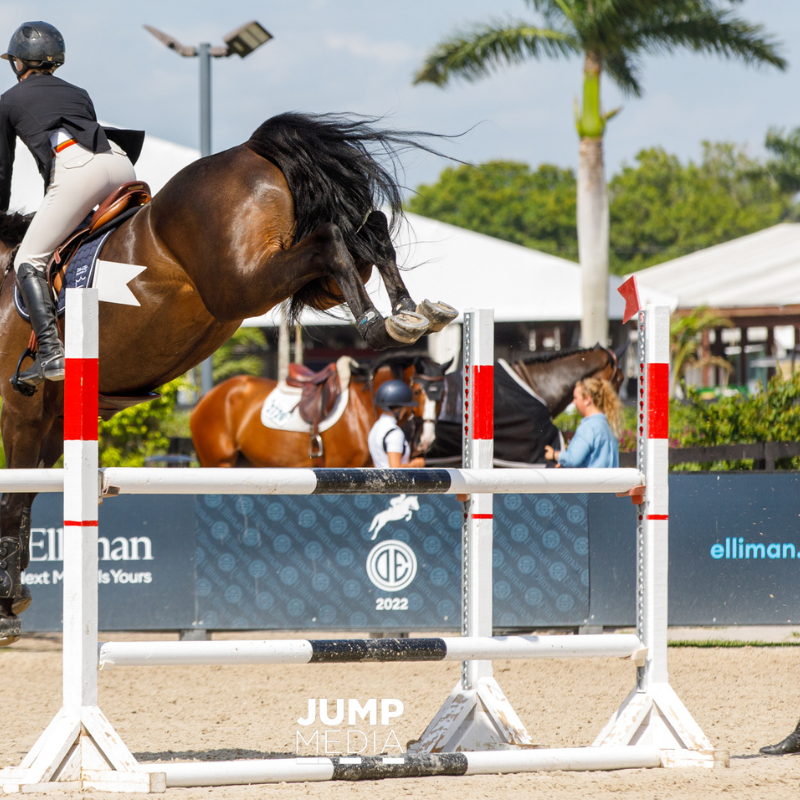
The FEI stewards monitor show jumping and cross-country warm-ups. They ensure that all jumps being set are compliant with FEI rules. In all cases, obstacles being jumped must be marked with a white flag and a red flag. The red flag represents the right side of the obstacle, while the white flag represents the left side. The jump must be approached in the direction the flags indicate. If a rider wishes to approach the obstacle in the opposite direction, the flags must be changed with approval from the Chief FEI Steward.

In cross-country, the show’s organizers must provide jumps that can be knocked down as well as fixed obstacles to use to warm-up. Keep in mind that for the obstacles that can be knocked down, there are guidelines for how the poles must be used depending on the height and style of the jump.

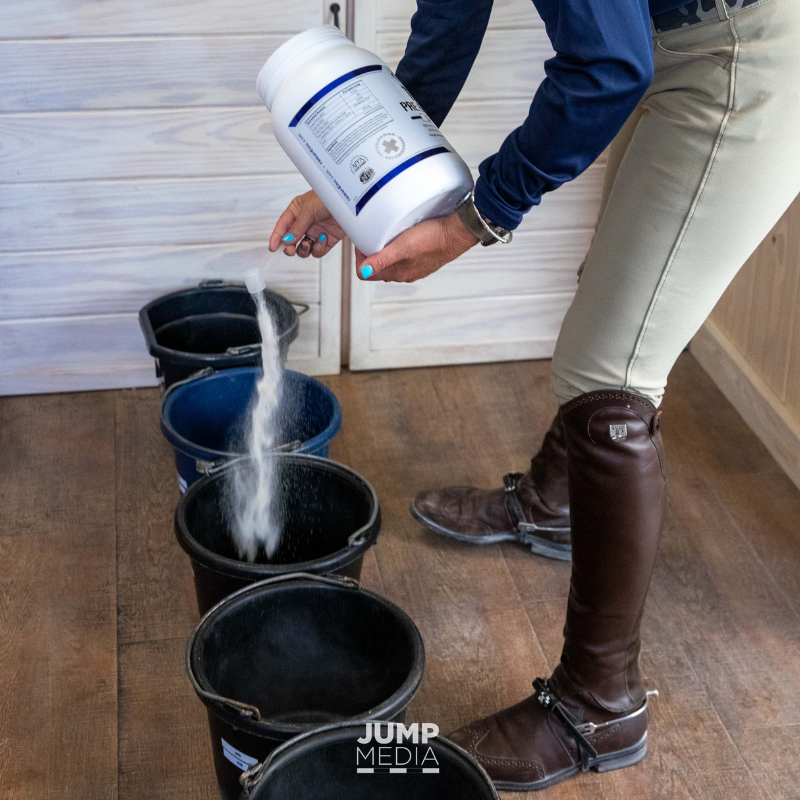
Photo by Jump Media

Use of Extra Jumping Material and a Liverpool

In any FEI warm-up, you cannot cover the warm-up obstacles with extra materials like a scrim sheet, cooler, or towel. You also cannot bring any additional jumping materials to the warm-up. The show’s organizers must provide at least one liverpool that can be used if the athlete chooses.

If you are setting jumps for the warm-up and your rider would like to use the liverpool, be sure to keep an eye on it in the warm-up area. Typically, there are only one or two liverpools that are shared between all the riders. You’ll have to see when someone is finished using it before being able to use it yourself. Keep in mind other riders are warming up too. It’s also important to remember to pay attention to the other horses when you pass the warm-up fences. This is especially necessary when you are carrying a larger, spookier object like a liverpool.

Pre-Competition Boot Check

Both international eventing cross-country and show jumping competitions have pre-competition boot checks. Previously, riders could ask an FEI steward to conduct the boot check in the middle of the warm-up ring during their warm-up. Now, for safety reasons, the FEI steward(s) who are conducting the pre-competition boot check are located just outside the warm-up area or in a corner of the arena off to the side. Riders can still pause their warm-up routine to complete the boot check. However, it is important to note that doing so requires a little more planning since the horse likely needs to leave the ring to be checked before returning to finish their warm-up and head into the competition arena.

The FEI stewards conducting the boot check use walkie-talkies to communicate with the other FEI stewards in and around the warm-up. They keep track of everyone who completes the boot check by referencing the horse’s competition number. The competition number should be clearly displayed on the horse. It is helpful to also say the number aloud to the steward. In addition to checking all leg and footwear on the horse, the FEI steward will physically examine the competition hind boots to confirm they are compliant with the rules. They then will observe the groom or rider put the competition hind boots on the horse and fasten them to be sure this has been done correctly. Once the boot check has been completed, the boots cannot be changed or adjusted in any way without the supervision of an FEI steward.

Remember that every horse must complete the boot check. It is possible for multiple riders to want their horses checked at the same time. The boot check typically only lasts a few minutes. The FEI steward will try to prioritize horses depending on the order of go. Even still, having a plan for when you will complete your boot check is essential for a smooth, unrushed warm-up.

Special Cases

Some horses get nervous with a lot of horse traffic. If there is an additional warm-up area besides the one being generally used, the rider can ask an FEI steward for permission to use the other arena. An FEI steward must be available to monitor that warm-up area in order to make the request possible. A rider can also ask to go first in the class for a quieter warm-up experience for the horse. Any concessions made will be on a case-by-case basis and up to the Chief FEI Steward. What might be possible one time, might not be another.

Keeping track of the little nuances of the warm-up will help your competition preparation run smoothly. Make sure your whole team understands the plan and rules, so they are ready to execute their individual responsibilities. For more information about entering an FEI show, read BarnManager’s FEI Paperwork blogs with part one about horse passports here, part two regarding registrations and entries here, and part three pertaining to the check-in and jog here.

Have questions about utilizing BarnManager or want to give it a try for yourself? Request a live demo here!
BarnManager is designed to be a part of your team, with the compatibility and credentials necessary to improve communication, simplify the management of horses, and get you out of the office, off the phone calls, and into the barn with the horses you care about! Click here to get a free demo and find out more!

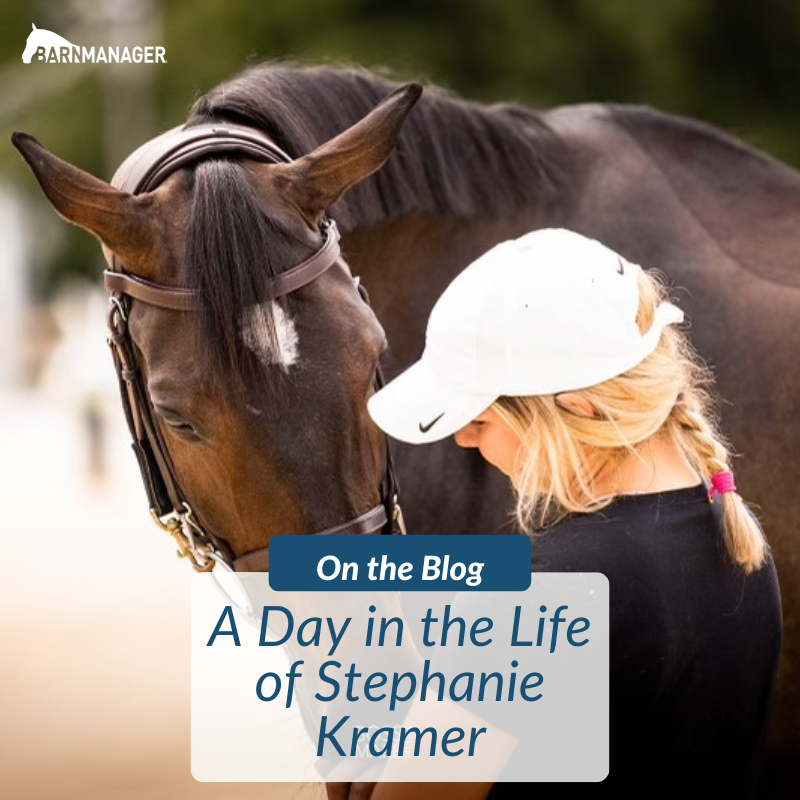
A Day in the Life of Stephanie Kramer

Stephanie Kramer works as a head groom for top amateur jumper rider Vanessa Hood and U.S. Olympian Kent Farrington. Keep reading for a day in Stephanie’s life at the Great Lakes Equestrian Festival Week 5 during the CSI5* Major League Show Jumping (MLSJ) Team Competition in Williamsburg, MI.

Friday, August 5, 2022

6 a.m.

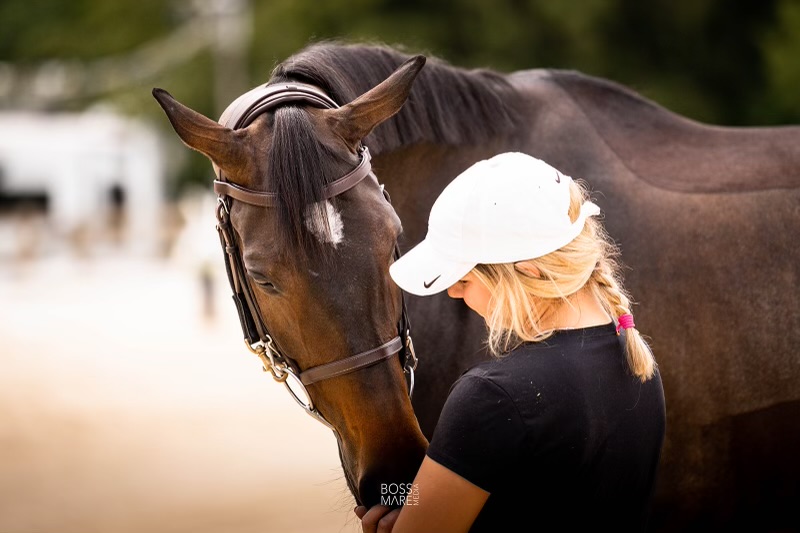
My first alarm goes off around six in the morning when we are starting at the barn at seven. I like to give myself time in the mornings, so I don’t feel rushed or stressed starting out the day. I usually make myself a coffee to go and grab some sort of granola bar or something light to get my day started.

Photo by Boss Mare Media

7 a.m.

I have three horses in FEI this week. I have one horse showing in two-star classes and two horses competing at the five-star level. No matter how many horses I have showing every day starts the same. We begin by feeding hay, then grain, and then moving on to the chores. When I have horses showing, they wear the Sport Innovations magnetic blanket in the morning.

8 a.m.

Once chores are done, I start getting my horses out for a hand walk and some grass. One by one I groom them and hand walk or graze them for 15-20 minutes to let them stretch their legs before they go to work. Cascalretto is the only horse I have showing today in the MLSJ Team Competition at 5:30 so when I take the first horse out I put the magnetic blanket on him and set the program and massage to run as I walk the other horse.

11 a.m.

My two other horses, Easy Girl and Conner, aren’t showing today so they will just flat. Once Vanessa is ready to ride one, I pull them back out and fully groom them again. I start with a good curry, then a flick brush, and I finish with some Santa Fe spray and a soft brush to protect their coat from the sun and keep them nice and shiny. As they go out, I like to keep their stalls picked as well so they’re always coming back to a clean stall.

12 p.m.

We feed lunch hay and top off water buckets at noon. Since Cascalretto will not get ridden until later in the day, I take him out for another quick walk and some grass between the two others getting ridden. Cascalretto will also get a short flat to loosen up a bit before the class tonight. As the other two come back from being ridden they both go for baths and grass. Before going for grass, I like to bring them back to the barn and towel dry them, brush their manes down, and put conditioner in their tails if I washed them that day. Then we are off to the FEI grazing area until they are dry and can go back to their stalls.

2 p.m.

At this time, I usually like to start my afternoon chores depending on what my day looks like. I get my stalls cleaned one last time and top off their water buckets. Then it is time to get Cascalretto ready for his quick flat before the class. He gets a full groom again before getting tacked up. He then heads out to loosen up. Once he’s back I give him a few minutes in his stall to get a drink and go to the bathroom before I pull him back out to get cleaned up.

3:30 p.m.

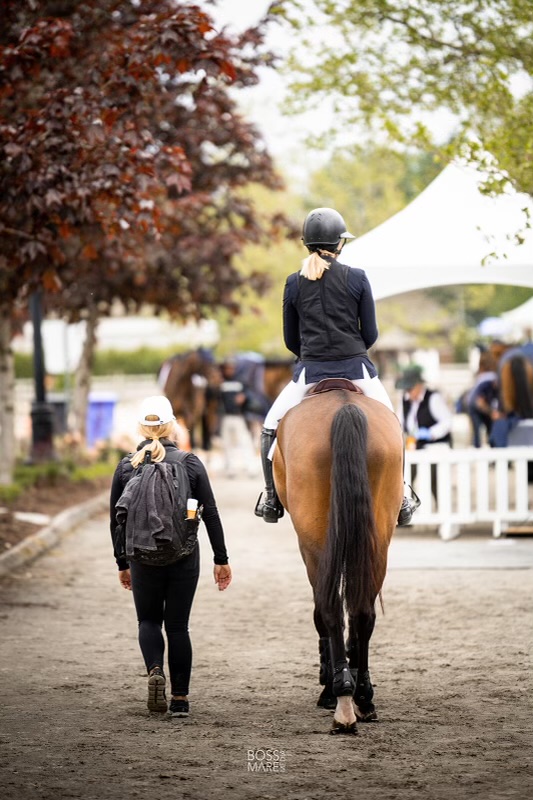
Photo by Boss Mare Media

The horses get dinner hay and then I like to tidy up the barn one last time before the end of the day. I usually sweep, dust, and all of that fun stuff. Today after they get their grain and are finished eating it is time for Cascalretto to come out and start getting ready for the ring. Vanessa’s team, which is Team Lugano Diamonds, is going first so that means he needs to be ready and at the ring by 4:45. The first thing I do is braid him. He doesn’t have the best mane for braids, so it always takes me a bit to get them to look good. Then I groom him one last time before tacking him up with his show tack. I put on his jump boots and grab boots, I double-check that my ring bag is ready, and then we head to the ring.

5 p.m.

I get Vanessa on, we do our pre-boot check, and I go grab a jump so we can warm up. Today wasn’t the best day for Team Lugano Diamonds but that just comes with the sport.

6 p.m.

Once Cascalretto is finished showing we go back to the barn and he gets untacked. I like to ice him in his stall so he has time to relax by himself before I continue with his aftercare. I leave the ice on for 20 minutes. Once he is done icing, he gets a good liniment bath to cool his muscles down. I take him out for a bit of grass to help him dry more quickly. Then I bring him back to the grooming stall to get wrapped. I poultice all four legs and pack his feet. Once that is done, I run a brush through his mane and tail and brush him off one last time before letting him go in his stall for the night. After he is put away, I quickly check over my other horses before heading out.

7:30 p.m.

When I get home, no matter how late it is, I always try my best to give myself a bit of time to decompress before going to bed. I’ll usually shower first, then make myself something for dinner, and then either watch an episode of a show or scroll through my phone to give myself a little “me time” before going to sleep and starting all over!

Have questions about utilizing BarnManager or want to give it a try for yourself? Request a live demo here!
BarnManager is designed to be a part of your team, with the compatibility and credentials necessary to improve communication, simplify the management of horses, and get you out of the office, off the phone calls, and into the barn with the horses you care about! Click here to get a free demo and find out more!

What You Need To Know About Flying with Horses

While the concept of flying with horses is pretty straightforward, the specifics of how the horses get from one place to the other smoothly are less obvious. Understanding more about the process can help you be relaxed and prepared when the day comes. It is always essential to check with your veterinarian regarding any preventative measures or in-flight health concerns. While these are general guidelines, you will need to check with the appropriate authorities and companies for exact details.

Types of Flights

If your horse needs to go a long distance such as across the country, or from the U.S. to Europe, flying can actually be less stressful. There are two kinds of flights with horses. One is a cargo flight where the plane does not have passengers beyond the horse-affiliated personnel. The other is a commercial flight with a passenger cabin at the front and a cargo-style section for the horses in the back.

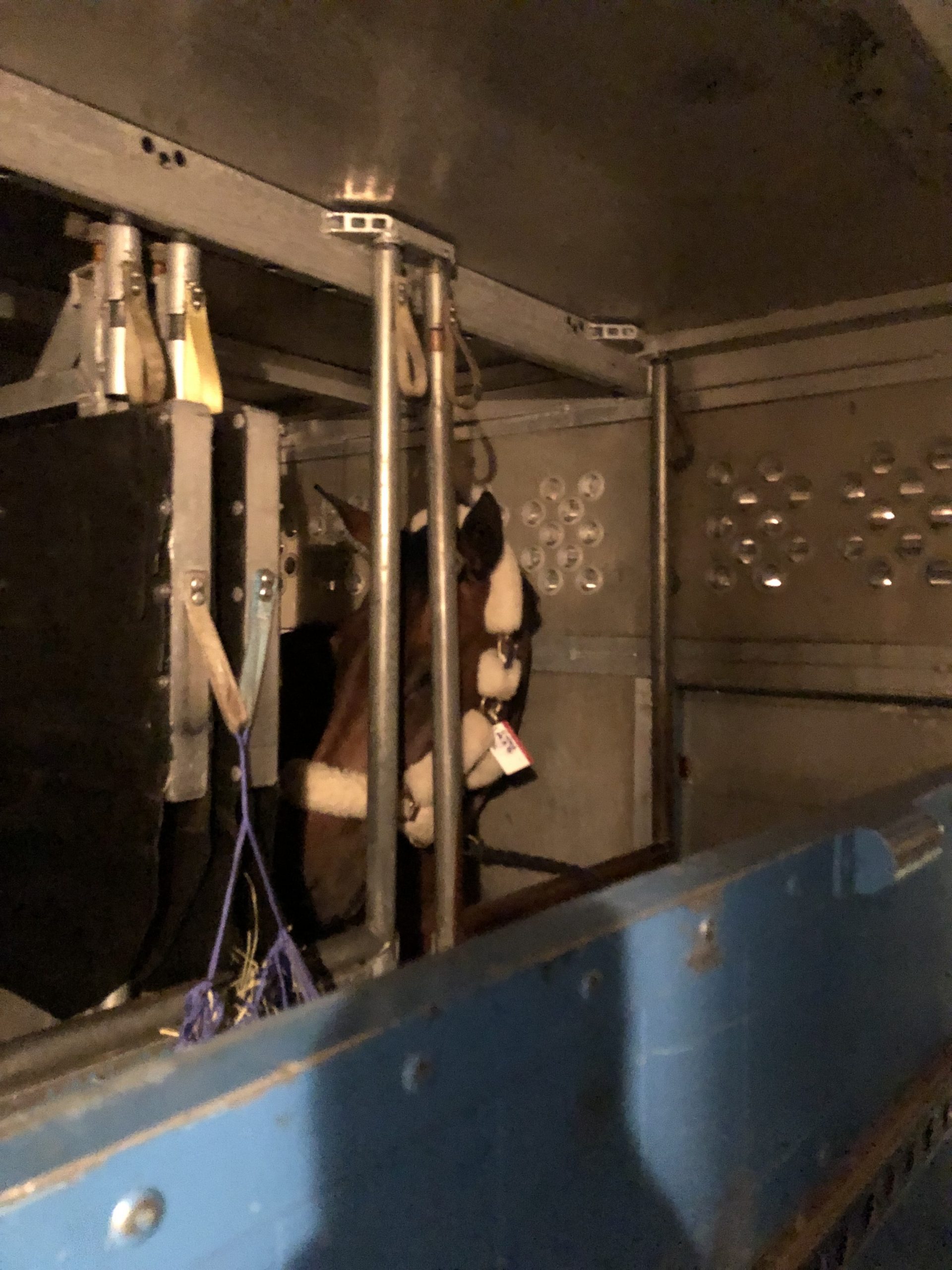
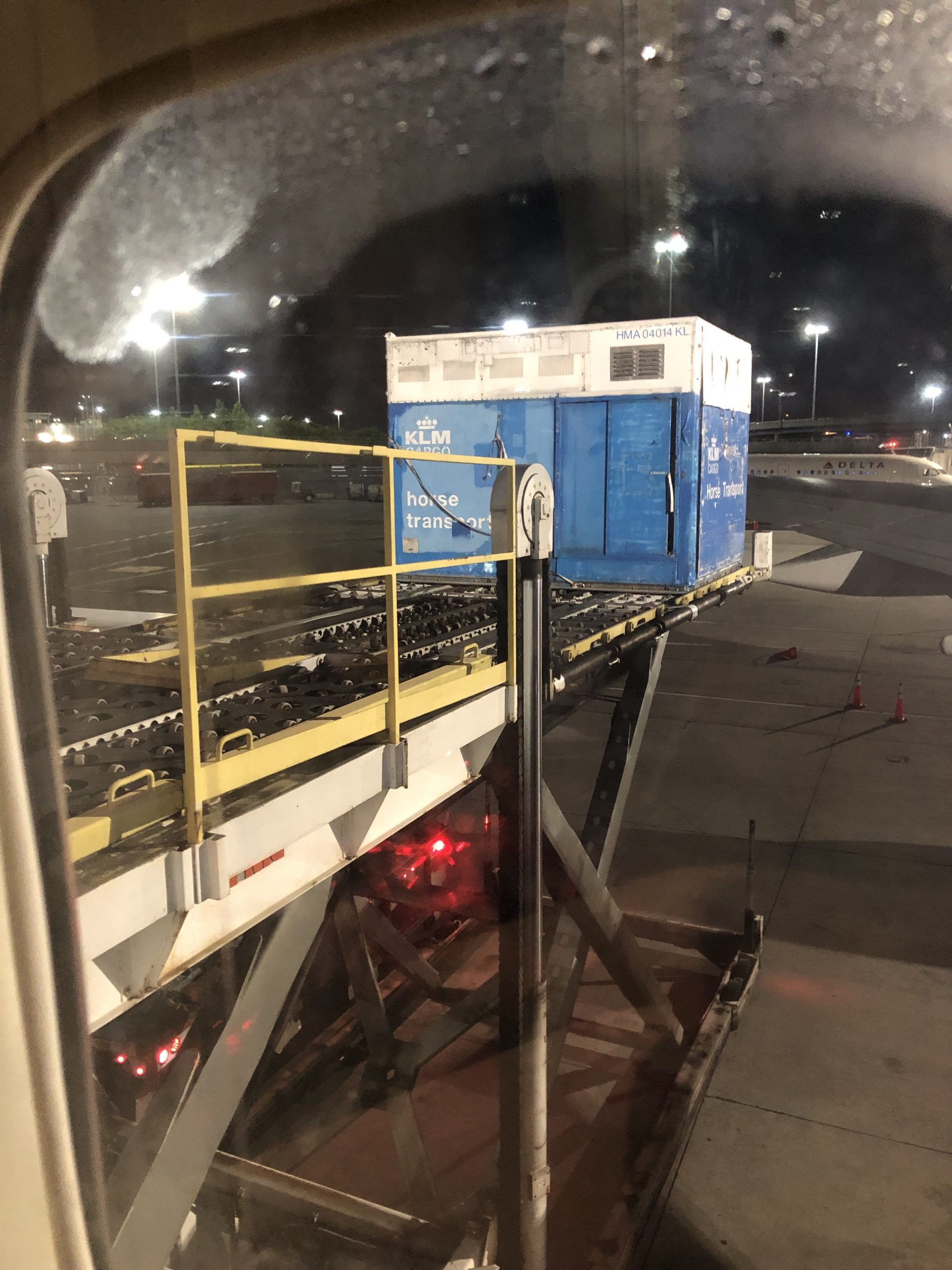
A horse in the container, on the plane, and ready to go.

Arranging a Flight

There are several flight companies to help you arrange and prepare for your horse’s trip. Unlike organizing human flights, you cannot always pick exactly which day you want your horses to fly. If you give the flight company an idea of when you would like to depart, they can help find a flight around that date. The flight companies also complete the necessary paperwork for the horses to travel and will inform you of any health documents and other details they might need to confirm the reservation. As with human flights, delays and cancellations are always possible, so the flight companies will keep you updated on timing.

At the Airport

There are different importation and exportation laws depending on which country you are coming from or going to. Generally, horses need to arrive at the designated airport at least several hours ahead of their scheduled flight. For this reason, these airports have stalls for the horses to wait in when they get off the trailer.

The horses can stay at the airport for a couple of days if they are laying over from a horse show or other type of outing, so it is helpful to prepare plastic baggies with grain meals. You can help keep your horse hydrated by including electrolytes and adding water to their feed. It’s also a good idea to feed smaller meals ahead of air travel to help minimize the risk of any digestive issues. Like preparing your horse for a long drive, a stomach and ulcer support supplement can help keep your horse comfortable for the trip.

Once your equipment is checked in by airport staff and loaded, you will not have access to it until it is released either directly after the flight or after the horse exits a required quarantine. Each horse gets a flight bag in which you can put anything they might need during the flight.

Getting On the Plane

A container with horses getting loaded onto the plane.

Horses travel on the plane in large containers. Picture being able to pick up a box stall and move it with a giant forklift. The containers can be divided into straight stalls to fit either two or three horses, similar to a trailer. The container has a space for the horses with a low wall separating them from a compartment in the front where hay, buckets, and the flight bags are stored. Water and hay are hung for the horses too.

Staff at the airport will guide you to walk your horse into their spot in the container. Some horses find the container intimidating especially if they are new to flying, so having a treat handy can help. When everything is set, the containers are driven to the plane and loaded one by one such that the containers form a grid in the plane with small walkways between them.

If you are on a commercial flight, the flight staff will then help you get to the normal airport check-in and through security. You will usually be able to board ahead of other passengers to make your way to the back of the plane. Where you might ordinarily be looking for a bathroom, there is a small door to access the horse containers. Once you have passed through the door, you can walk around to find the container with your horse inside.

The Flight

Regardless of what type of flight it is, there will always be at least one flight staff member with the containers at all times. Since there can be more than twenty horses on a flight, it is still a good idea to check on your horse every couple of hours during the trip. Keeping them hydrated throughout is always important. You can encourage your horse to drink by holding carrots for them in their water buckets. The horse will have to go through the water to get the carrot, so it can help them drink a little extra.

Take-off and landing are generally the most stressful parts of the flight, so it’s good to make sure your horse doesn’t have any trouble. Though regulations can vary between flights and flight companies, you can ask the flight staff to request permission from the pilot to allow you to be with the containers during take-off and landing. There are no seats in the containers, so you will need to try and secure yourself comfortably in the front part of the container amongst the hay and flight bags. Keep in mind, flights can always experience turbulence, so it is important to be cautious any time you are moving around the containers.

Prepared for takeoff!

Getting Off the Plane

On commercial flights, first you will have to deplane as usual and claim any checked baggage. Then you will be guided to the horse arrival area of the airport, where you can wait for the containers to be removed from the plane. Once the horses are unloaded from the containers, staff at the airport will check each horse in accordance with country regulations. Some countries require a quarantine while others do not. Be sure to confirm your arrival with any follow-up shippers, so you can get picked up on time and make it smoothly to your final destination.

In addition to simply transporting you and your horse from one place to another, the flight company staff is also responsible for ensuring the experience is safe and pleasant. Ask any questions you might have so you can feel confident every step of the way. You are now free to move about the cabin.

Have questions about utilizing BarnManager or want to give it a try for yourself? Request a live demo here!
BarnManager is designed to be a part of your team, with the compatibility and credentials necessary to improve communication, simplify the management of horses, and get you out of the office, off the phone calls, and into the barn with the horses you care about! Click here to get a free demo and find out more!

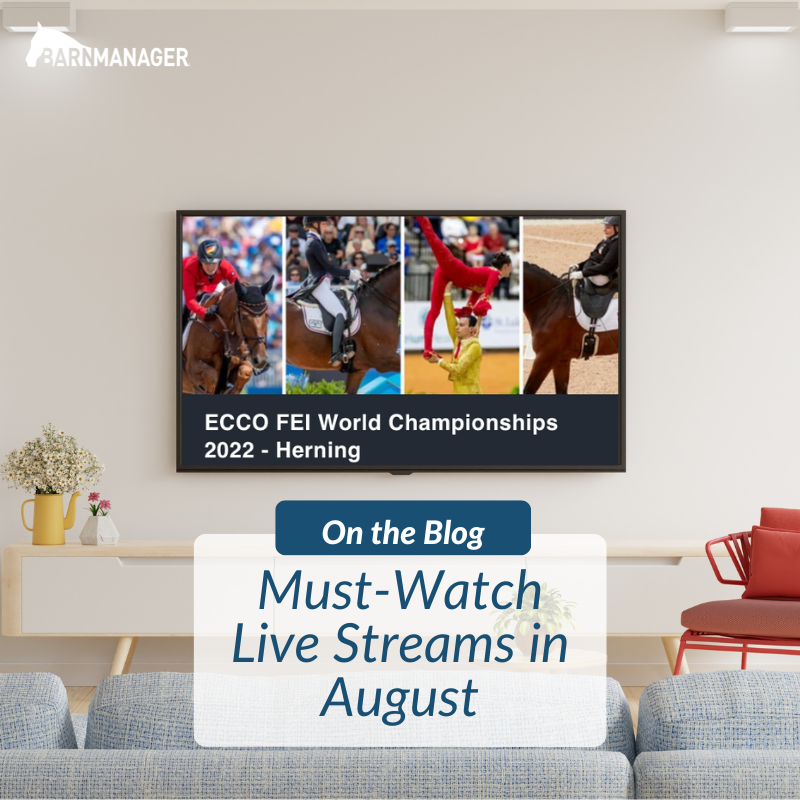
Must-Watch Live Streams in August

As the summer show season begins to wrap up, there are several exciting events slated for August. Continue reading to find out where you can watch the top show jumping, hunter, equitation, dressage, and eventing competitions this month.

ECCO Fédération Équestre Internationale (FEI) World Championships:

August 6-14, 2022 – This year’s FEI World Championships will take place at EquiPark in Herning, Denmark. The championship will showcase dressage, show jumping, vaulting, and para dressage competition. The best horse-and-rider combinations from close to 70 nations will provide top-level competition. The event schedule for each discipline can be found on Longines Timing.

Where to watch: ClipMyHorse.TV

FEI North American Youth Championships:

August 8-13, 2022 – The 2022 FEI North American Youth Championsships will take place during the Great Lakes Equestrian Festival week VI at Flintfields Horse Park in Williamsburg, MI. The horse show will feature both show jumping and dressage competition. Children, juniors, and young riders will have the opportunity to compete in a championship format. During this show, riders are able to show in a team event as well as individually.

Where to watch: USEF Network or ClipMyHorse.TV

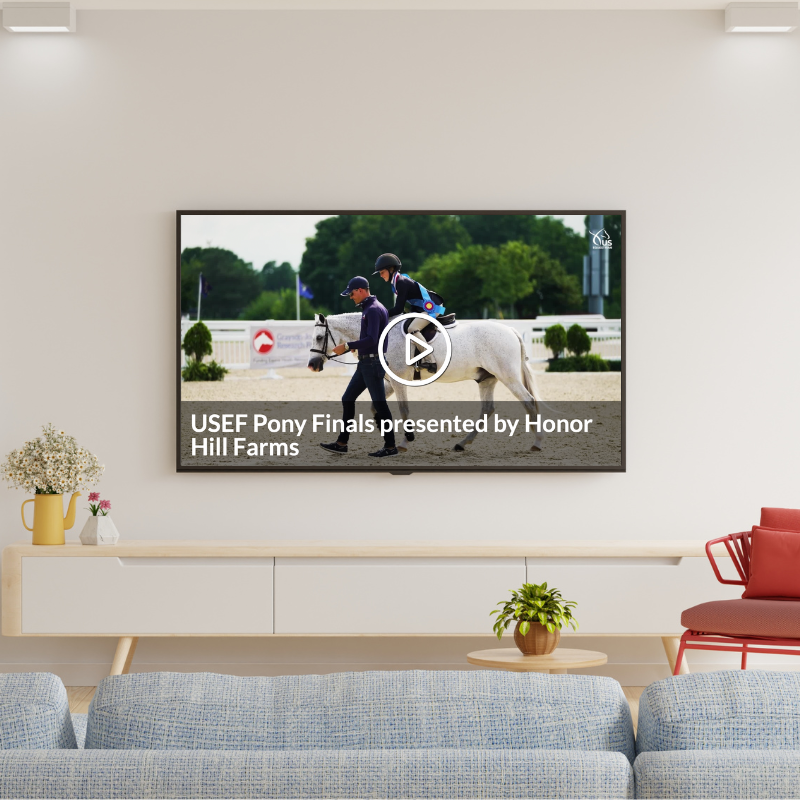
US Equestrian (USEF) Pony Finals Presented by Honor Hill Farm:

August 9-14, 2022 – Watch the country’s best ponies compete at the 2022 USEF Pony Finals presented by Honor Hill Farm. The event takes place at the Kentucky Horse Park in Lexington, KY. The competition will feature the Regular Pony Hunter USEF Championship, the Green Pony Hunter USEF Championship, and the Marshall & Sterling/USEF Pony Medal Finals.

Where to watch: USEF Network

Longines Global Champions Tour (LGCT) London:

August 19-21, 2022 – LGCT London will take place at Royal Hospital Chelsea in London, England. The show will include two-star, five-star, and Global Champions League show jumping competition. The Longines Global Champions Tour Grand Prix of London will be the highlight event, taking place on Saturday, August 20.

Where to watch: GCTV

United States Dressage Festival of Champions:

August 22-28, 2022 – The 2022 U.S. Dressage Festival of Champions will take place at HITS Chicago at Lamplight Equestrian in Wayne, IL. The event showcases top dressage horse-and-rider combinations in 16 different divisions, including the USEF Dressage Seat Medal Finals.

Where to watch: USEF Network

World Equestrian Center – Ocala Dressage XV:

August 27-28, 2022 – Dressage riders will take center stage at World Equestrian Center – Ocala during the Dressage XV show in Ocala, FL. This event will be a national show and also serve as an official qualifying competition for the 2022 Great American/United States Dressage Federation Regional Championship.

Where to watch: ClipMyHorse.TV

MARS Great Meadow International:

August 26-28, 2022 – The MARS Great Meadow International event is held at Great Meadow in The Plains, VA. This competition highlights high-performance eventing and has been selected as the final preparatory trial for the team representing the United States at the 2022 FEI Eventing World Championships in Italy on September 14-18, 2022.

Where to watch: Horse & Country

Have questions about utilizing BarnManager or want to give it a try for yourself? Request a live demo here!
BarnManager is designed to be a part of your team, with the compatibility and credentials necessary to improve communication, simplify the management of horses, and get you out of the office, off the phone calls, and into the barn with the horses you care about! Click here to get a free demo and find out more!

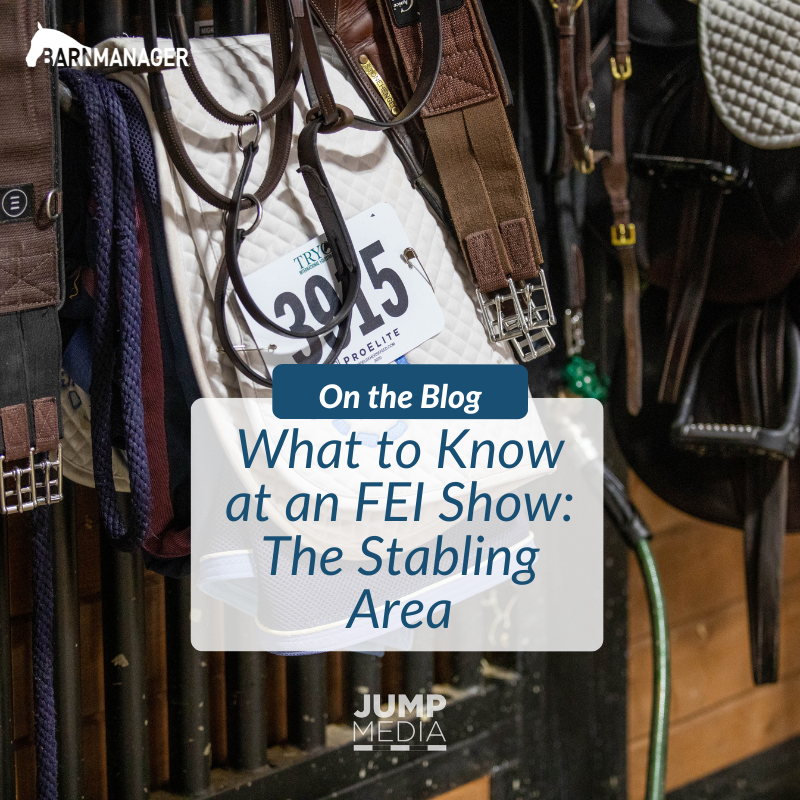
What To Know at an FEI Show: The Stabling Area

Competing at the international level in a Fédération Equestre Internationale (FEI) show comes with its own set of rules and regulations. From the stabling area, to the warm-up arena, to after the round, being aware of these intricacies can help you stay organized. The first step to having a successful show is good preparation and planning. Even before you leave the stabling area, there’s a lot you can do to keep your team on track. For more information about entering an FEI show, read BarnManager’s FEI Paperwork blog about horse passports here, and BarnManager’s FEI Paperwork blog about registrations and entries here.

Keep your credentials handy.

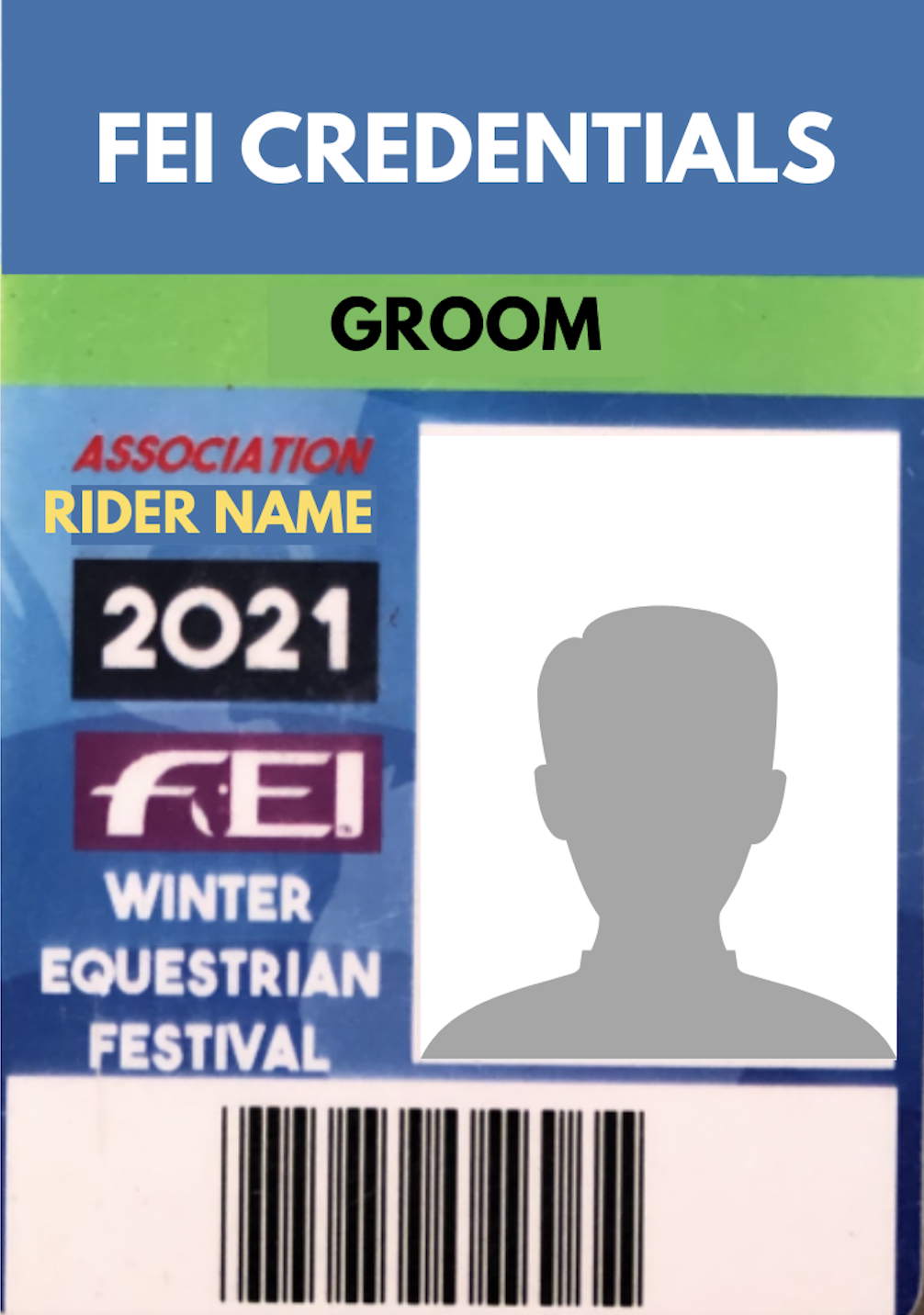
The FEI stabling area is fenced in with limited entrances that are always monitored. You must have an FEI credential to access the area. To learn more about obtaining an FEI credential, read BarnManager’s FEI Paperwork blog about the check-in and jog here. FEI competing horses must wear their competition number to temporarily exit the stabling area. Additionally, all FEI-designated areas, such as schooling and warm-up rings or grazing areas, are limited to credentialed personnel, so be sure to carry your FEI credential at all times to alert the stewards that you are authorized to be in FEI-designated areas.

Make note of the FEI stewards in the stabling area.

The FEI stabling area is regulated and monitored by the FEI competition stewards. Their job is to ensure the welfare of the horses. This includes checking that the stalls are clean and bedded sufficiently, that the horses are properly cared for, and that the horse show facilities are in working order. At any point during the competition, including in the stabling area, an FEI steward is permitted to inspect tack or equipment to confirm compliance with the rules. They also can examine a horse, especially if they suspect there might be an issue of misconduct. There is always at least one FEI steward in the stabling area, so if you have any questions or concerns, they are a very good resource.

Check in and check out of the stabling area at night.

The FEI stabling area is technically considered closed at night. To get in, such as for night check, you will need to see the entrance gate monitor. They will have a list to keep track of everyone entering and exiting the area. This list includes the times each person arrives and departs as well as the rider associated with the horse(s) they are seeing. As technology has advanced, some shows will have you scan your FEI credential to keep track of comings and goings.

Have a plan for medication.

In the FEI stabling compound, there are designated treatment stalls reserved for veterinary or therapeutic treatment. Unlike national stabling, you cannot bring medication administration materials, such as needles or syringes, into the FEI stabling area. Any medication must be given by a veterinarian in one of the designated treatment stalls in the presence of a steward. Furthermore, the competition vet may only administer medications during specific treatment hours. For this reason, it is important to plan ahead and consider anything you think your horse might need. Something as simple as an injectable joint support supplement must be given under these regulations. Also remember that the permitted and prohibited substances for FEI can differ from that of the National Federation. More information on FEI prohibited substances can be found here.

Pay attention to announcements.

During the competition, it is typical for a class’s progress to be announced over a loudspeaker in the stabling area. While a lot of shows also have live orders online that you can access through your phone, real-time announcements are a helpful tool to get to the ring on time. Other announcements, like scheduling changes, are important to listen for too. Significant updates will also be posted on the bulletin board either at the entrance to the FEI stabling area or by the FEI office.

Staying on top of the details will enable you to make the best plan and contribute most effectively to your team. When in doubt, the best thing to do is to ask questions to make sure you are correctly following all regulations. Sometimes the best way to learn is by doing!

Have questions about utilizing BarnManager or want to give it a try for yourself? Request a live demo here!

BarnManager is designed to be a part of your team, with the compatibility and credentials necessary to improve communication, simplify the management of horses, and get you out of the office, off the phone calls, and into the barn with the horses you care about! Click here to get a free demo and find out more!

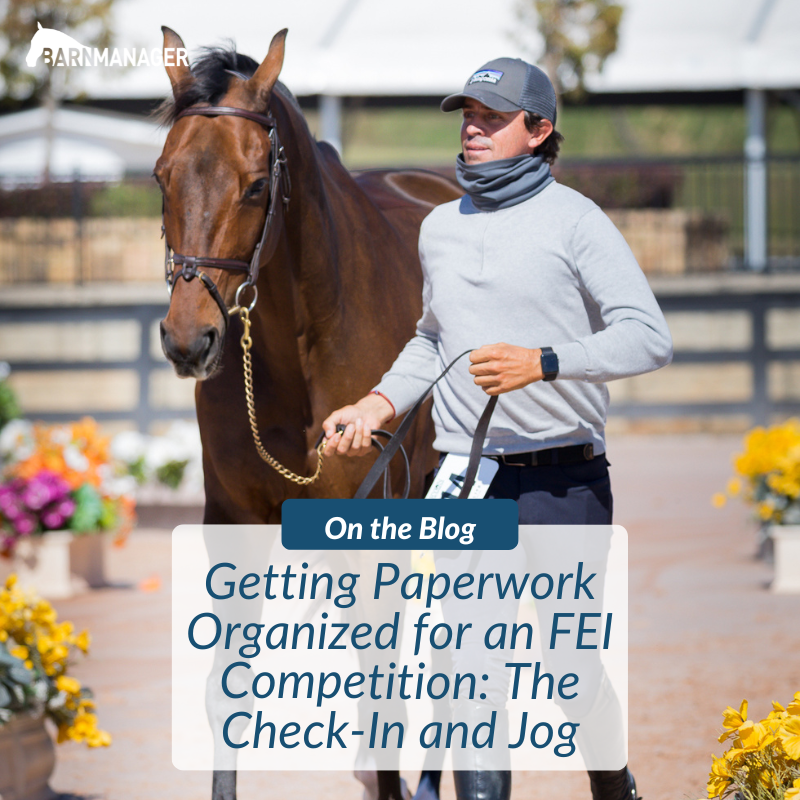
Getting Paperwork Organized for an FEI Competition: The Check-In and Jog

Even after preparing the horse’s passport and completing all of the registrations and entry paperwork, there are still some steps before being accepted at a Fédération Equestre Internationale (FEI) competition. Staying aware of everything you need and the timing of the FEI schedule at the show can help you make the best plan for your team and the horse. Read the first part of our FEI Paperwork blog HERE, and find the second piece HERE.

Before Arriving at the Show:

All FEI competing horses must be stabled in the designated FEI stabling compound. New in 2022, the FEI is now requiring a digitally signed waiver attesting to the horse’s health, as well as body temperature recordings of the horse in the morning and afternoon for three days prior to entering FEI stabling. This information needs to be recorded in the FEI Horse Manager mobile app. It should be completed by the staff taking care of the horse in FEI stabling throughout the competition. Temperature also needs to be taken in this manner for every day the horse is in FEI stabling.

Another important thing to check before getting to the show is FEI stabling credential passes. Only people with FEI stabling credentials are permitted to enter the FEI stabling area at any time. Some competitions give out credential wristbands at the veterinary inspection jog. At other shows, those with connections to the competing horse who wish to enter the FEI area, such as owners, riders, and trainers, need to apply for a stabling credential prior to arriving at the show and then pick up their pass – usually from the FEI office. There is a limit to how many people can have credentials per horse, and the number varies per show. It is a good idea to check how many credentials you may be given ahead of time if that might be a concern for your team. Look for announcements from the show’s organizers about when you should receive your credentials, how many are being distributed per horse, and if there are additional forms to complete.

Checking In to the Stabling Area:

All competing horses must arrive at the FEI stabling compound and complete the initial check-in process during the allotted time listed in the official FEI schedule. You will need your horse’s competition back number, so be sure to stop by the show office to pick it up. Plan your arrival to the show so you can promptly unload your trailer and have enough time to check-in.

The vets at the check-in verify the horse’s identity by scanning the microchip. They cross-reference that with the passport and back number. They also confirm the temperature logs and the horse’s temperature upon arrival to FEI stabling. Ensure that you come prepared with the horse’s passport, number, and enough help such that someone can hold the horse and someone else can take the temperature to present to the show vet.

Remember that once the horse has been admitted to the FEI stabling compound, it cannot leave the show grounds until it has finished competing for the week. Any time a horse temporarily leaves FEI stabling for exercise, hand walking, bathing, or competition, the person at the FEI stabling entrance gate needs to be able to see the horse’s back number to record when the horse leaves and re-enters the FEI stabling area.

Horses outside of the FEI stabling area need to be monitored by the FEI stewards. You must use the FEI-designated areas for riding, grazing, bathing, and competition. If the horse is temporarily leaving FEI stabling, it is essential that either the horse or horse-handler has the horse’s back number attached to them in some capacity. Many grooms choose to have a secondary number that they keep on them at all times when working in FEI stabling.

The Veterinary Inspection Jog:

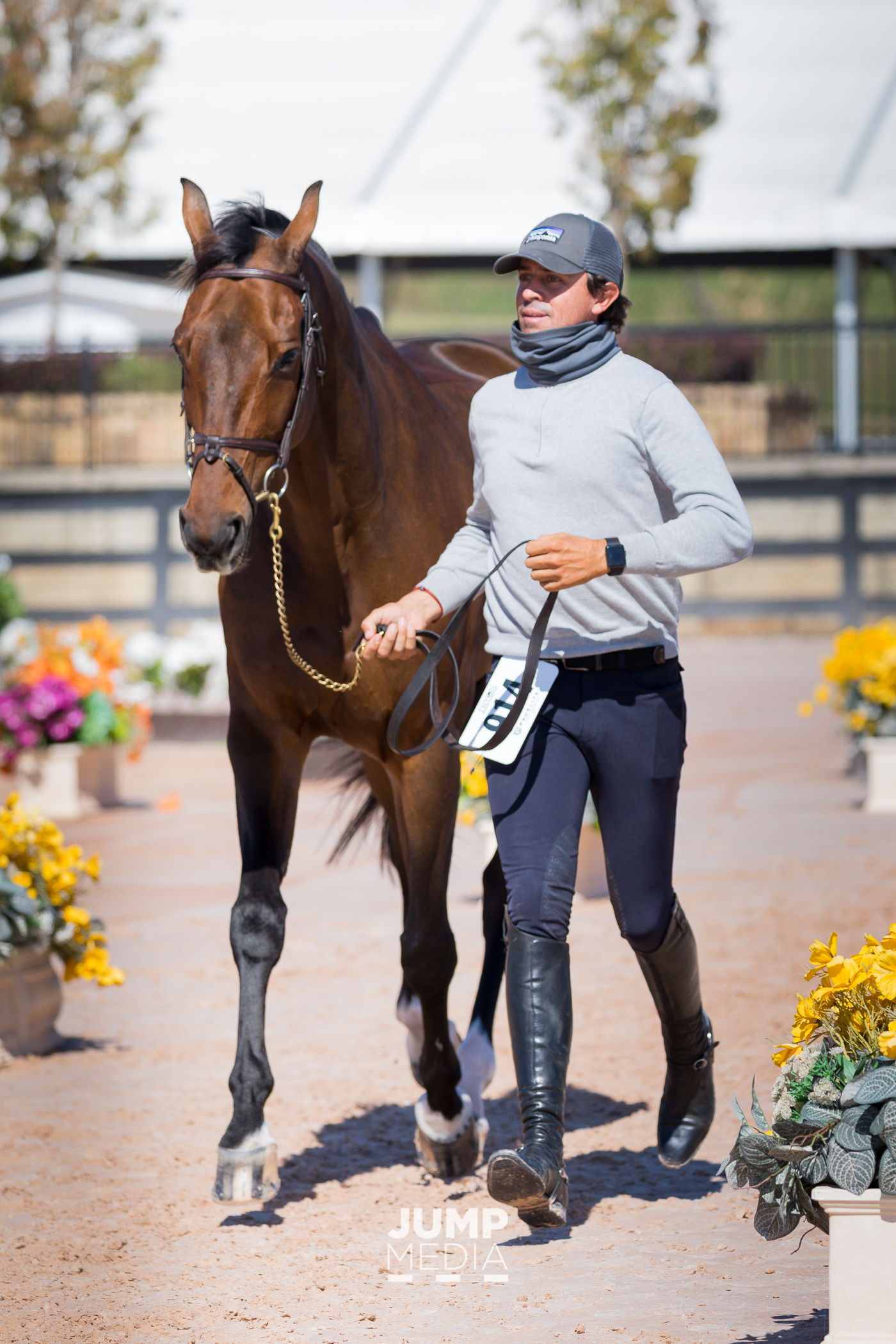
The jog, also known as the veterinary inspection, happens at an indicated time after the check-in window. There might be separate jog times for different levels of competition if they are happening concurrently, or the jogs might happen simultaneously. Be sure to make note of the time of the jog and have a plan for your horse’s schedule. Some people like to have their horses ridden before the inspection so they are looser and more relaxed. If that is the case, you need to allow enough time to have the horse properly cooled off and groomed. Though it is not an official rule, it is generally expected that horses arrive at the jog nicely turned out. Remember that the jog is a veterinary inspection. This means that your horse should not have any tack or equipment besides the bridle. If it is raining, you could cover your horse with a rain sheet while you wait in line, but you’ll be asked to remove it for the actual jog.

At the veterinary inspection, the passport is checked thoroughly. You also have to jog the horse down and back for soundness on the designated strip. For this, you need the horse, passport, and number. If all goes well and the horse passes inspection, the stewards will keep the passport until the horse leaves FEI stabling at the conclusion of its competition week.

Make sure you factor enough time for the jog into your plans for the day. It can be challenging to avoid waiting in line since every horse needs to be seen at the inspection. Arriving a little early can sometimes help mitigate waiting for an extended period of time.

If you have a stallion, confer with a steward about where to wait for your turn to jog. In order to keep all the horses and people safe, stewards will usually keep stallions separated from the general lineup. They will slot them into the inspection when they can. If you have a particularly challenging horse to handle, it is always a good idea to speak with the steward ahead of time, so you can be as cautious as possible.

Don’t forget that you will need to jog your horse in a snaffle bit or double bridle. You will need to do this even if it is not something they use ordinarily. You can jog with the reins of the bridle, a lead line, or a lunge line. It is best to think about how your horse might react to the atmosphere at the jog and plan accordingly.

Making lists of what you need for each phase of the check-in and jog process can help you stay organized. Having reminders on your phone for different timings can also be helpful. While it can seem daunting at first, the great thing about participating in FEI competitions is that you are among the best athletes, stewards, veterinarians, grooms, etc. It is a great opportunity to learn, and the added intensity will make your successes feel even sweeter. Enjoy the experience, and don’t forget to retrieve your horse’s passport once you are done competing before you head home!

Have questions about utilizing BarnManager or want to give it a try for yourself? Request a live demo here!
BarnManager is designed to be a part of your team, with the compatibility and credentials necessary to improve communication, simplify the management of horses, and get you out of the office, off the phone calls, and into the barn with the horses you care about! Click here to get a free demo and find out more!

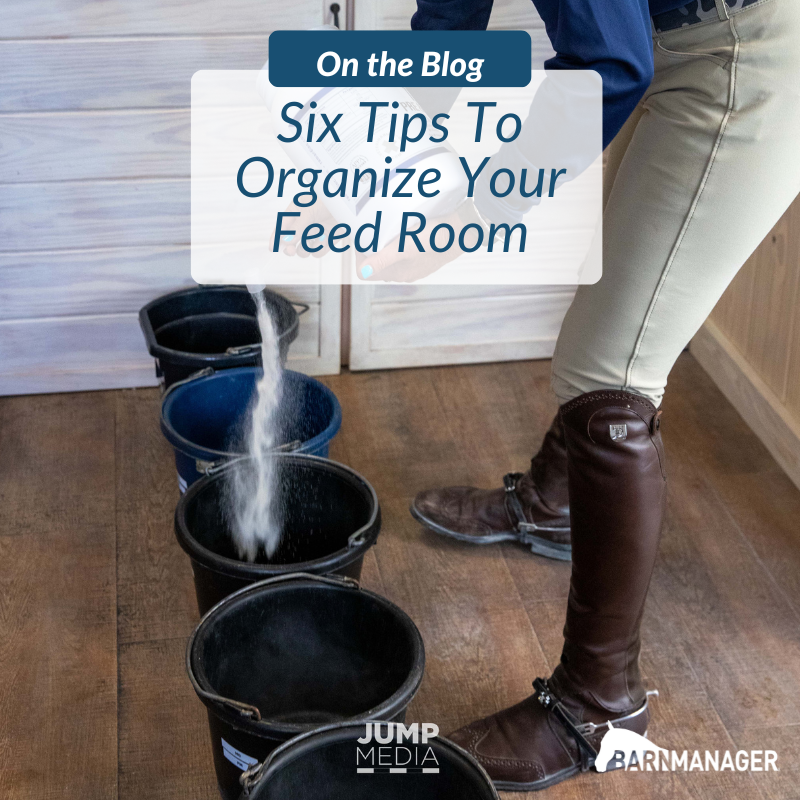
Six Tips To Organize Your Feed Room

One of the most frequently used places in a barn is the feed room. Keeping this area organized is necessary to ensure that horses are receiving the correct grain and supplements. Keep reading for some tips from BarnManager on how to keep this room clean and neat.

1. Keep an Updated Feed List

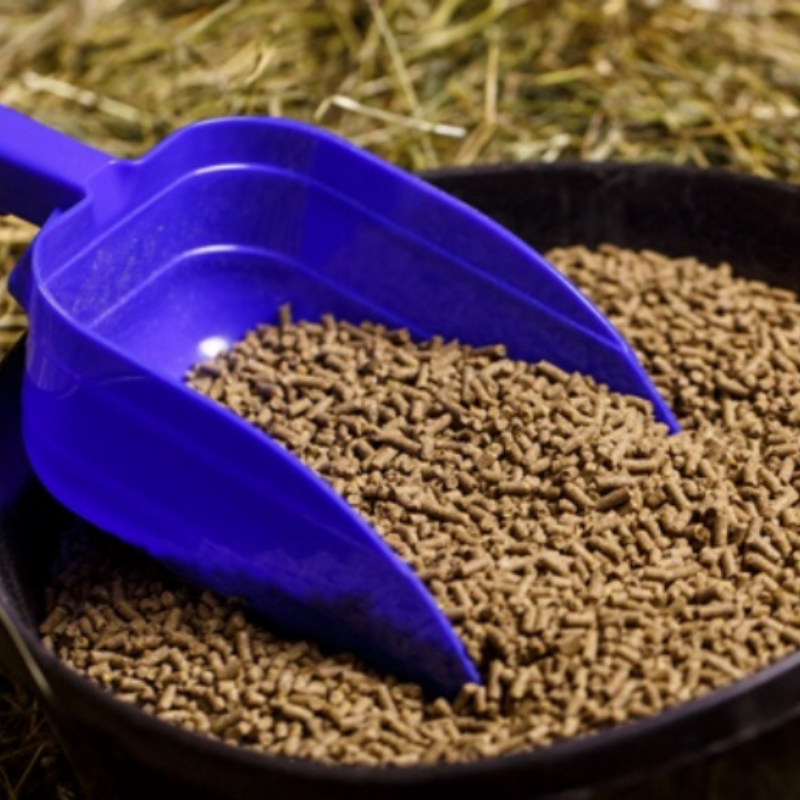
One of the most important parts of a feed room is an updated list of what grain, supplements, and medications each horse is getting. Although most barns usually have one or two people who make the grain, it is crucial to keep a list in case they are away or not able to do the job that day. Providing horses with correct grain, supplements, and medication consistently is key, so start with a well-written feed chart or list. White boards are often useful for these types of lists because they make it easy to add, change, or remove items; however, whiteboards can make it more difficult to keep track of any changes being made. You should also include important special circumstances on this board such as a note about a horse needing water added to their grain or if the supply of a certain item is running low.

(Did You Know? BarnManager allows you to create, download, and print a feed chart! BarnManager also creates a Feed Change Log to document all changes made to a horse’s feed, supplements and medications over time.)

2. Put Grain in Bins

If you are feeding a large number of horses and have multiple types of grain, consider putting the grain in large bins instead of keeping it in the original bags. This can help make your feed room look neat and tidy. Also, multiple grain bags often fit into one bin so it can help save space. Invest in bins or containers that are sturdy and have lids to keep animals and insects out. When refilling the containers make sure that they are completely empty before adding in a new bag so the grain at the bottom does not stay there too long and go bad.

3. Label Everything

The next step in organizing your feed room is to label everything. If you do put your grain in bins, make sure to clearly label each lid. If a horse has a specific medication, it is helpful to write the horse’s name on the bottle or box along with the administration instructions. Some clients may have certain supplements or medications for their horses, so you should write their name on those containers as well. Also, label all the grain buckets. Clearly write the horse’s name along with the time of day the grain should be given on each one. Another tip is to have buckets in specific colors for each feeding time such as morning, lunch, and night grain.

4. Organize Medications and Medical Supplies

Keep extra medications and medical supplies like syringes and needles in a separate trunk, wall box, or container in the feed room. Storing these items separately from day-to-day supplements can help avoid confusion. Although these items are stored separately, make sure that they are still easily accessible and organized in case of an emergency.

5. Keep Medications Properly Sealed

It is important to make sure that any medications or supplements that would show up on a drug test are well-sealed and securely stored. These types of medications and supplements may include regumate, flunixin meglumine, acepromazine, or methocarbomol. Keeping these items isolated will help prevent accidentally contaminating the grain of a horse that is not receiving those medications or supplements. While contaminating grain can be a major problem in a show barn where the horses might get drug tested at a competition, it can also be an issue at any stable. Accidentally contaminating a horse’s grain with medication or supplements that they are not on can sometimes be dangerous. Keeping these items well-sealed and organized can help prevent this problem from happening.

6. Sweep and Wipe Surfaces

Another way to prevent contaminating feed with supplements or medications is to thoroughly sweep and wipe down surfaces every day. Making grain can be a messy task, so cleaning the room afterward is key. Along with preventing contamination, cleaning the feed room will keep the area neat, pleasant to work in, and also reduce the likelihood of insects or animals entering.

When organizing your feed room, it is important to make everything as clear, obvious, and simple as possible so you can rest assured that the feed is made correctly. When a good system is in place all employees can feel confident about successfully preparing the feed, even if it is not part of their daily routine.

Have questions about utilizing BarnManager or want to give it a try for yourself? Request a live demo here!
BarnManager is designed to be a part of your team, with the compatibility and credentials necessary to improve communication, simplify the management of horses, and get you out of the office, off the phone calls, and into the barn with the horses you care about! Click here to get a free demo and find out more!

Getting Paperwork Organized for an FEI Competition: Registrations and Entries

You’re excited to participate in your upcoming Fédération Equestre Internationale (FEI) designated competition, whether that be as a rider, groom, manager, or owner, and you’ve been charged with making sure the paperwork is organized. The horse’s passport is ready to go, so what do you need to do now to actually enter the show? Entering an FEI show is a bit more complicated than a national-level competition, so it requires a little organization and some advanced planning of your team’s show schedule. Read the first part of our FEI Paperwork blog HERE.

Registrations

Rider USEF:

Similar to national competitions, it’s important to make sure the rider’s US Equestrian (USEF) membership is up to date. You should also be sure that they have completed their annual SafeSport training. Both items can be handled through USEF’s website.

Rider FEI:

If the rider has never competed in an FEI designated show, they will need to apply for an FEI registration number. This usually takes a few business days to process but is an important step to handle well in advance of the show in order to accomplish the other parts of the entry process. A rider’s initial FEI registration and annual renewal can be completed through the USEF portal’s Membership Dashboard. Be sure to look out for the confirmation email, so you can be certain everything is in order.

Horse USEF:

Horses with U.S. ownership must have lifetime USEF memberships (not just annual recordings) in order to be eligible for FEI competitions. You should make sure to confirm this status on USEF’s website.

Horse FEI:

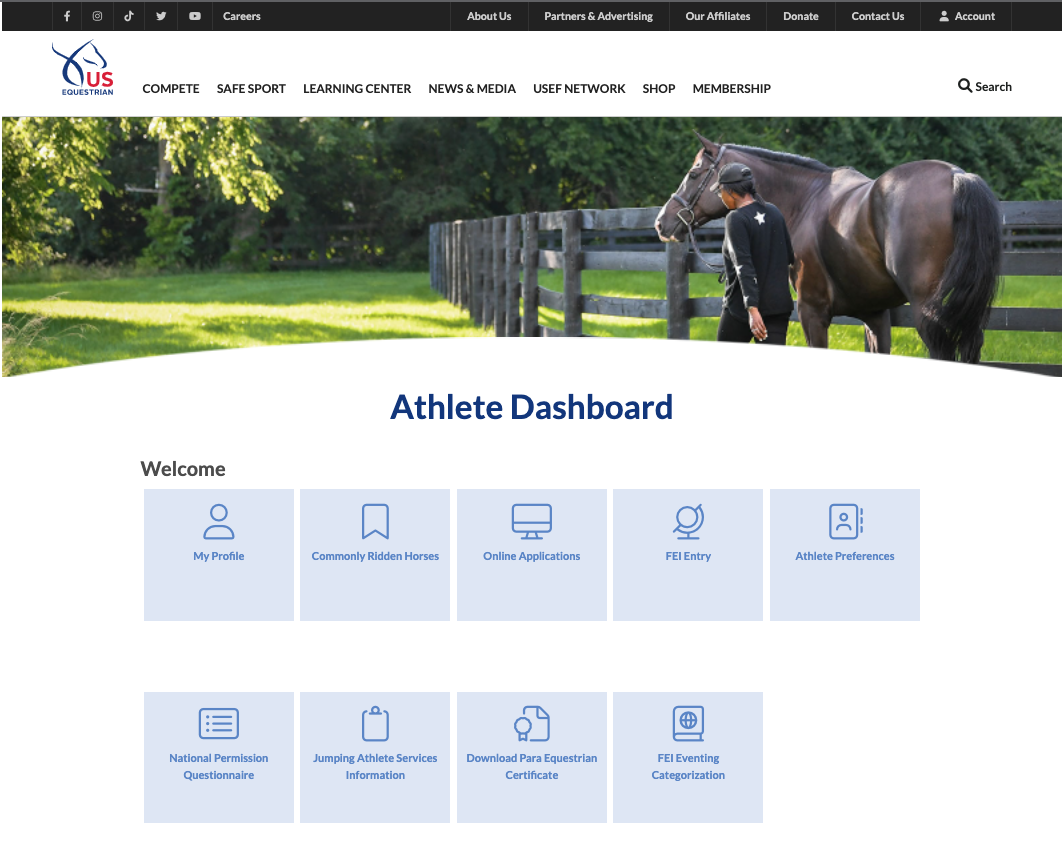
Horses also need to be registered annually with the FEI. Like rider registrations and renewals, this can be handled through the rider’s Membership Dashboard on USEF’s website. Once a horse is registered, you will need to add it to the “Commonly Ridden Horses” list through the rider’s Athlete Dashboard in order to be able to enter it in any competitions.

Entries:

Horse Show Entry:

Just as for any national competition, horses and riders competing in FEI classes must fill out the show’s entry form. This can be done either by paper or online. In addition, FEI entries must be accepted by both the rider’s National Federation and the show’s Organizing Committee.

USEF Portal Entry System:

In order to be accepted by the National Federation to compete at any FEI designated show, riders need to declare their intention to show with their chosen horse(s) through USEF’s Athlete Dashboard. There, you can select nationally and internationally hosted shows to enter. The submitted entry request then must be approved by USEF. If the request is accepted, the National Federation submits all horse and rider entries to the FEI.

If the level of competition being entered is interpreted by the USEF representatives as too advanced for the rider, they will not permit the intended entry. While a trainer’s note of explanation can help overturn an initial rejection, the USEF representatives ultimately make the final decision. An entry for a rider that is not in good standing also will not be permitted.

FEI Wish List:

The FEI invitation system, or “wish list” as it’s referred to, is only used for show jumping, but is an important step for those events. When a rider places in FEI competition, they earn ranking points in the Longines Global Ranking. Once a rider has a high enough rank, they are required to express their intention to compete in desired shows through the FEI SportsManager application or the FEI online portal. While all riders can view the entry system, only riders with ranking status can submit wishes. This is to allow a show’s Organizing Committee to accept higher-ranked athletes first and then see how many available spots there are to include lower-ranked and unranked athletes. Riders can be automatically accepted based on ranking if there is no entry limit to the show. However, if there is a limit, the show’s Organizing Committee can issue an acceptance manually based on the rider’s ranking and how many entries they receive overall.

With these “wishes,” riders specify which shows they would like to enter and with how many horses. As plans develop, they can change the selected horses at a later date if they so choose. Adding more than one horse to a wish reflects how many horses the rider wants to compete at the show. Wishes are made during the four-week period taking place eight to five weeks before the week of the competition. For this reason, you need to have your intended schedule planned out ahead of time.

Entry Acceptance:

It’s always good to have a backup plan in mind in the event your FEI entry is rejected by the Organizing Committee or National Federation. Your team might decide to enter national level classes at the same competition instead, or a different show altogether. For show jumping, the wish list helps enable riders to rank multiple wishes for competitions occurring during the same week in order of preference. Therefore, if the rider does not get accepted to a particular FEI competition, they might be admitted to a different FEI show taking place at another venue during the same week.

Entry Withdrawals:

Once the rider’s entry is accepted, it is important to remember that should anything change necessitating an entry scratch, there is a deadline to withdraw an FEI entry without financial consequence. Typically, this is the week before the veterinary inspection jog–which signifies the beginning of the competition–but it is always good to double-check for deadline dates in order to avoid an unnecessary fee. If the entry has already been accepted by both USEF and the horse show organizers, you must contact both parties to completely withdraw your entry.

Planning ahead and organizing your show schedule will help you keep track of which competitions you want to attend at the FEI level. Although it may seem overwhelming, creating a detailed calendar with deadlines will help. Having a system in place will ensure that you arrive at the veterinary inspection jog ready for competition!

(Did you know? BarnManager has a calendar feature with reminders so you do not have to worry about missing important dates!)

Handy Links:

Have questions about utilizing BarnManager or want to give it a try for yourself? Request a live demo here!
BarnManager is designed to be a part of your team, with the compatibility and credentials necessary to improve communication, simplify the management of horses, and get you out of the office, off the phone calls, and into the barn with the horses you care about! Click here to get a free demo and find out more!

See Barn Manager in Action

Ready to streamline your barn’s operations?


Book a quick demo and discover how Barn Manager can save you time, keep your team organized, and give you peace of mind.